
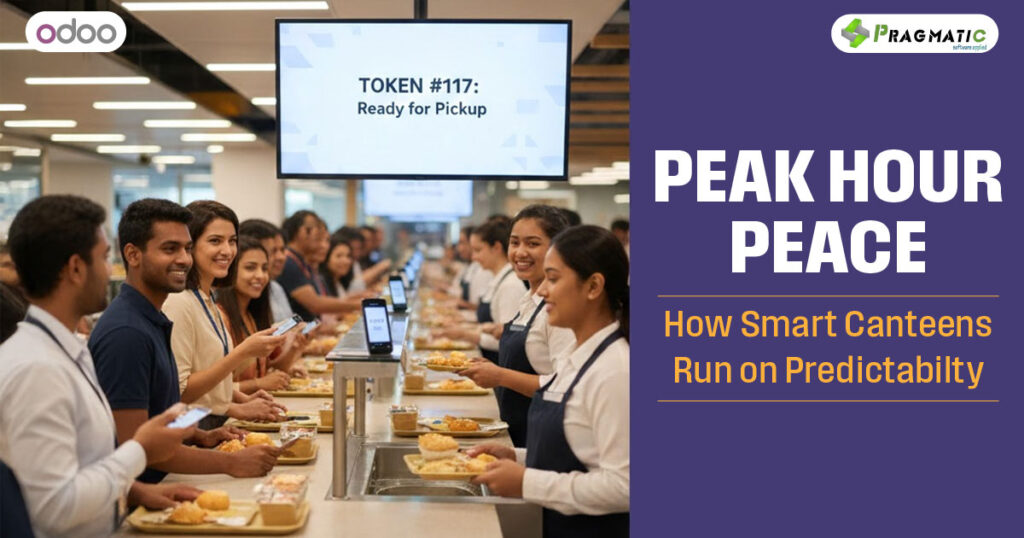
The hour that decides everything
Every corporate canteen has a personality.
Some feel calm and organised. Others feel rushed, noisy and tense.
What most people don’t realise is that this personality isn’t shaped by the food, the menu or even the size of the canteen. It’s shaped by one specific hour every day.
Lunch. And then perhaps snacks!
It’s during these hours where everyone shows up together. Where time is limited. Where people are hungry, meetings are waiting and patience is thin.
Outside of this window, almost any canteen looks fine. Orders trickle in. Staff manages. Things move at a human pace.
But during lunch, the canteen stops being a food operation and becomes a coordination problem.
And that’s where the real truth shows up.
This blog is about understanding why peak hours expose weaknesses, why manual processes struggle under pressure and how well-designed systems quietly keep things calm without anyone noticing.
Why Peak Hours Feel So Different
Peak hours are not just “busy times”.
They combine three things that don’t work well together :
- A large number of people
- A very short time window
- Human decision-making under pressure
When volume increases, small mistakes multiply. A missed entry, a wrong assumption or a delayed update that wouldn’t matter at 11 AM suddenly becomes a problem at 1 PM.
This is why canteens that feel perfectly manageable most of the day suddenly feel out of control during lunch.
The issue is that manual coordination doesn’t scale in real time.
How Corporate canteens work when a system is in place
In organizations where canteens run smoothly even during rush hours, the difference is not more staff or stricter supervision. The difference is clarity built into the process.
Let’s break down what that looks like.
1) Orders are anchored to identity
Instead of anonymous orders shouted across a counter, each order is clearly linked to a person.
That might be an employee ID, a badge, an RFID card or a QR-based identity. The method can vary, but the principle stays the same: the system knows who the order belongs to.
This removes a surprising amount of confusion.
There’s no guessing later. No “this was for someone else”. No loose ends during pickup.
2) Payment is not an afterthought
In structured canteens, payment happens early and clearly.
Employees might pay using prepaid balances, badges, wallets, or other cashless methods, but the important thing isn’t the mode. It’s the rule behind it.
Food doesn’t move until payment is recorded.
This removes negotiation from the counter. Staff no longer has to decide who to trust or who to remind later. The system enforces the rule consistently, which actually makes things fairer for everyone.
3) Tokens create order without noise
Once payment is done, the system generates a token.
This token is not handwritten or remembered. It’s created automatically and tied directly to the order and the payment.
At the pickup counter, staff doesn’t rely on memory or loud voices. They rely on the list of valid tokens in front of them.
This one change alone dramatically reduces chaos. The process becomes quiet, predictable and fair.
4) Stock is checked before promises are made
One of the most common causes of frustration during peak hours is selling food that’s no longer available.
In system-driven canteens, stock levels are visible while the order is being created. If something is running low or unavailable, it’s known immediately.
This prevents awkward conversations later and avoids refunds that slow everything down.
More importantly, it builds trust. Employees stop feeling like food is being “taken away” after they’ve already paid.
5) Managers get a clear picture after the rush
When the lunch rush ends, managers in system-driven environments don’t rely on stories or assumptions.
They can see :
- What sold out early
- Where delays happened
- How long delivery actually took
- How demand behaved
This visibility allows improvement. Without it, the same problems repeat every day.
What happens when there is no system
Now let’s look at the other side, because many canteens still operate this way.
Not because they want to. But because this is how things evolved.
1. Manual tokens and paper coupons
Physical tokens and coupons are easy to start with, but hard to control.
They get misplaced.
They get reused.
They get shared.
During peak hours, no one has time to track them properly and later no one can confidently say how many meals were actually served.
2. Registers that break under pressure
Handwritten registers work when things are slow. During rush hours, they become unreliable.
Names are skipped. Entries are delayed. Writing becomes unreadable. Accuracy drops.
Later, when someone tries to reconcile numbers, they’re working with incomplete information.
3. Cash slows everything down
Cash at the counter adds friction at the worst possible time.
It slows queues, creates disputes over change, and makes end-of-day reconciliation painful. Every extra second is spent handling cash compounds when dozens of people are waiting.
4. Menus that don’t reflect reality
Menus written on boards or printed sheets don’t update when food runs out.
So staff keeps taking orders for items that are no longer available. This leads to last-minute changes, arguments and refunds – all during peak pressure.
5. Inventory that’s tracked too late
In manual setups, inventory is often reviewed after service.
By then, the damage is done. Either food was wasted due to over-preparation or people went hungry because demand was underestimated.
Without real-time visibility, planning becomes guesswork.
Why chaos is inevitable without structure
It’s important to say this clearly.
Chaos during peak hours is not caused by :
- Careless staff
- Unreasonable employees
- Poor intentions
It’s caused by too many decisions being made manually at the worst possible time.
Systems work because they move decisions earlier, when pressure is low. Humans work best when they’re not forced to think fast and remember everything at once.
A Peak-Hour Flow That Holds Up Under Pressure
When you step back, the flow that works is actually very simple.
First, the order is created with full visibility – including stock and charges.
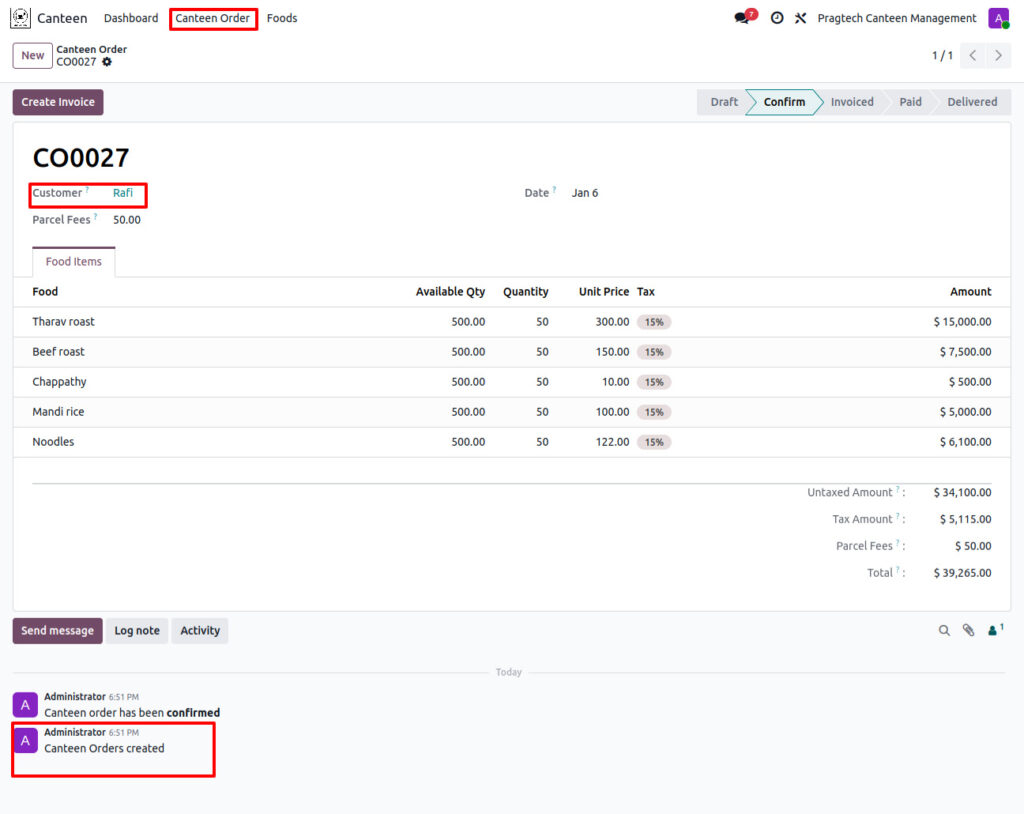
Then the order is confirmed and recorded cleanly.
Payment is registered before food moves.
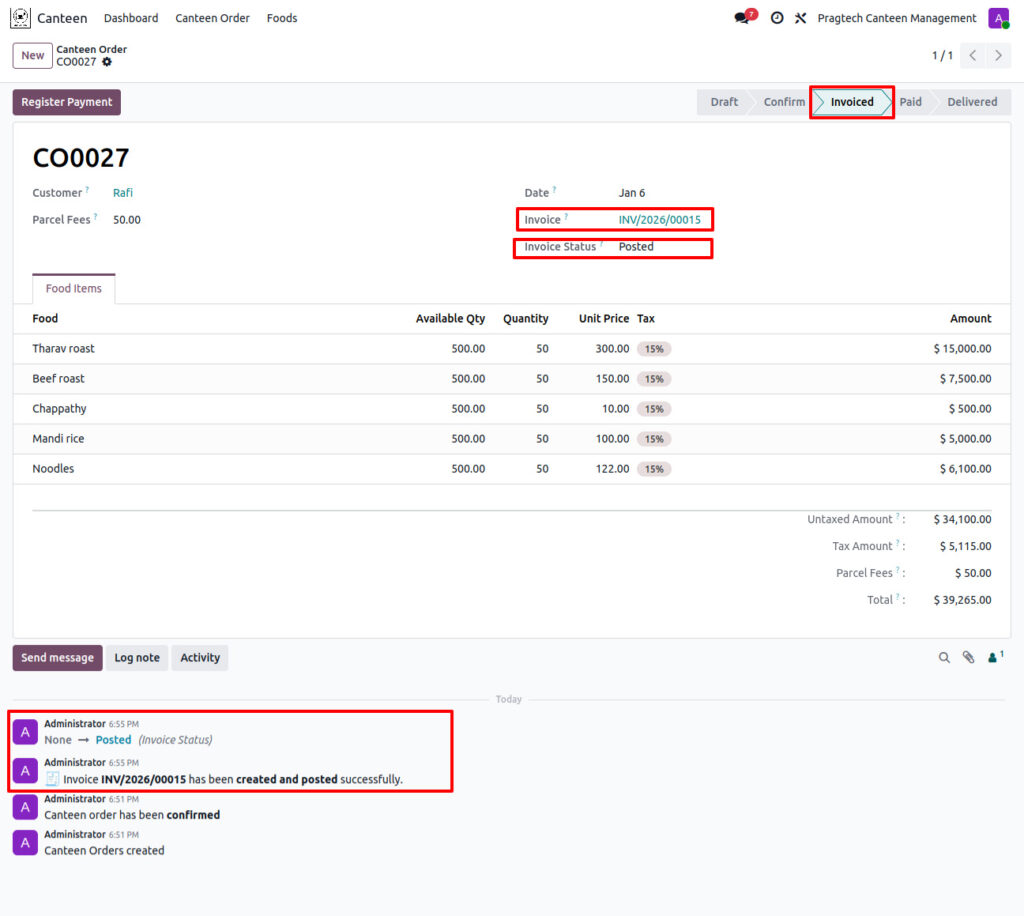
A token is generated automatically.
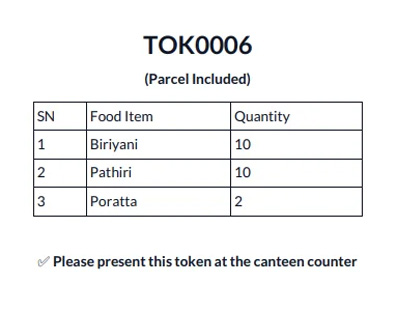
Pickup happens only against that token.
Delivery is closed properly.
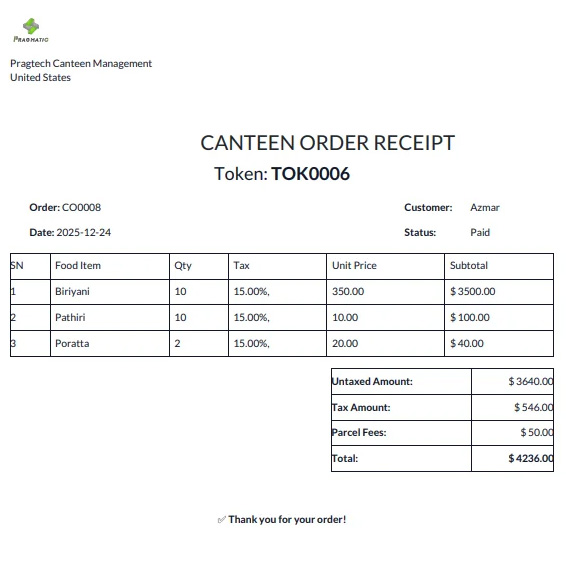
Each step removes uncertainty from the next.
Where the Canteen Management app fits In
The Canteen Management app built on Odoo is designed around this exact flow.
It doesn’t try to impress with complexity. It focuses on removing the points where things usually break.
By handling :
- Employee-based orders
- Parcel charges
- Real-time stock visibility
- Structured order states
- Payment-linked tokens
- Pickup dashboards
- Delivery validation
- Audit trails and dashboards
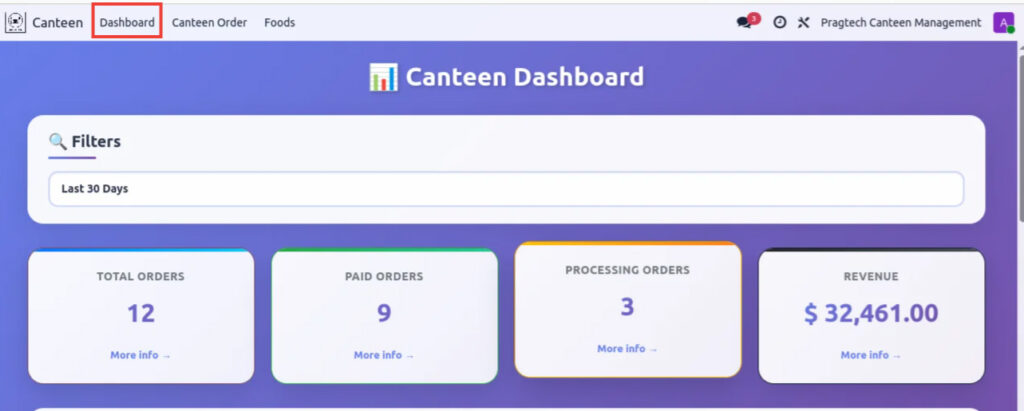
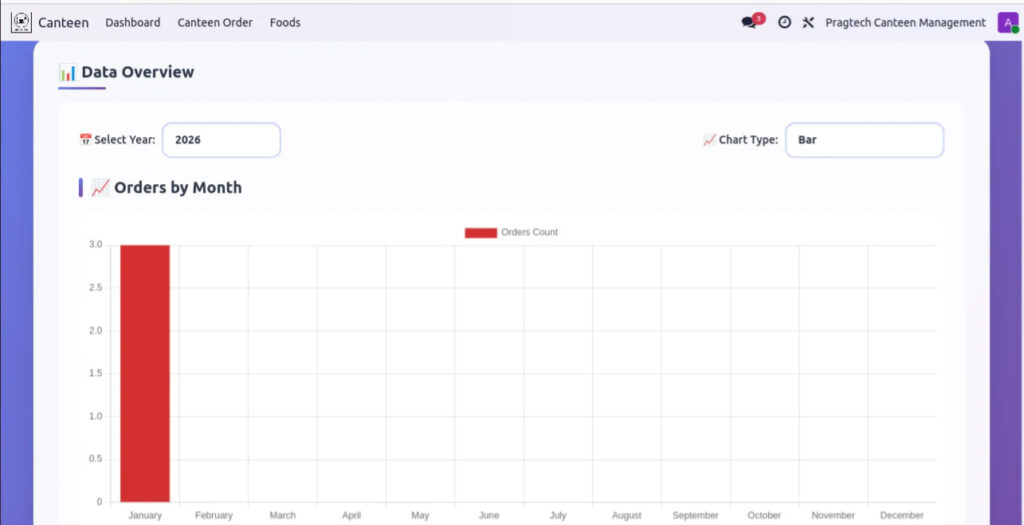
…it allows staff to focus on serving, not managing chaos.
Who This Kind of System Is Actually Meant For
This applies to any place where many people eat within a short time.
Corporate offices
Factories with shift breaks
Hospitals
Universities
Large campuses
If your canteen has a rush hour, the problem and the solution are the same.
Why this is about predictability, not technology
People don’t want “digital transformation” in their lunch break.
They want shorter waits,fewer arguments,predictable service and calmer staff!
Technology is only useful when it delivers those outcomes quietly.
Rolling out a system without staff resistance
When a canteen runs calmly during peak hours, it’s not because people worked harder.
It’s because :
The process removed guesswork
Rules were enforced consistently
Decisions were made before pressure hit
Calm operations are designed. Peak hours don’t need more effort. They need better structure.
Why peak-hour peace is intentional, not accidental
Peace in a canteen during a 1:00 PM rush isn’t a stroke of luck. It is the result of operational design.
When you remove the need for staff to remember who paid, or for customers to wonder if the last portion of biryani is still available, you create a vacuum where stress used to live. That vacuum is filled by efficiency.
The goal of implementing a system like the Canteen Management app for Odoo v19 isn’t to replace the human element of your canteen. It’s to protect it. It allows your staff to be polite instead of panicked, and your employees to return to their desks feeling recharged instead of frustrated.
Run your canteen on auto-pilot
From live stock tracking to payment-locked tokens, our Odoo v19 module removes the friction that slows your business down.
See the exact flow from Order to Delivery in a live environment.
Structure isn’t a burden; it’s the foundation of speed.
FAQs
1. Will a digital system slow down the queue at the counter?
Actually, the opposite happens. While entering an order takes a few seconds, it eliminates the 2-minute arguments over wrong change, forgotten items, or “who was next.” Digital entry moves the queue faster by removing friction.
2. What if our staff isn’t tech-savvy?
The best systems are designed like a smartphone app – intuitive and visual. If your staff can use a messaging app, they can manage a “Ready for Delivery” dashboard. The system is built to reduce their mental load, not increase it.
3. Can we handle “Parcel” or “Takeaway” orders differently?
Yes. The system allows you to toggle “Parcel” mode, which automatically applies pre-configured packaging fees and alerts the kitchen to pack the food accordingly, ensuring no revenue is lost on consumables.
4. How does this help with food waste?
Because you have real-time data on what sells and what doesn’t, you can adjust your procurement and prep-lists daily. If the “Special Salad” consistently sells out by 12:45 PM, you know to increase production and capture that lost revenue.