
A customer is browsing through your online store.
They find the product they want. They add it to their cart. They move to the checkout.
Everything seems perfect.
Then they reach the payment page and pause.
They scroll through the options :
Credit card. Debit card. Net banking.
But the option they use every day is missing. UPI.
For many Indian shoppers today, this moment decides whether a purchase happens or not.
This shift in behavior is not just a trend. It reflects a deeper change in how digital payments work in India.
For online businesses, understanding this shift is becoming essential.
The Unified Payments Interface (UPI), developed by the National Payments Corporation of India (NPCI), has become one of the most successful digital payment systems in the world.
According to data published by the National Payments Corporation of India (NPCI), UPI has crossed billions of transactions per month.[NPCI UPI Statistics]
This growth has been driven by :
Apps like Google Pay, PhonePe, Paytm and others have made UPI a daily habit for millions of users.
Today, UPI is used for everything from street vendors and grocery stores to large eCommerce purchases.
And that changes expectations.
For many consumers in India, UPI has become the default way to pay.
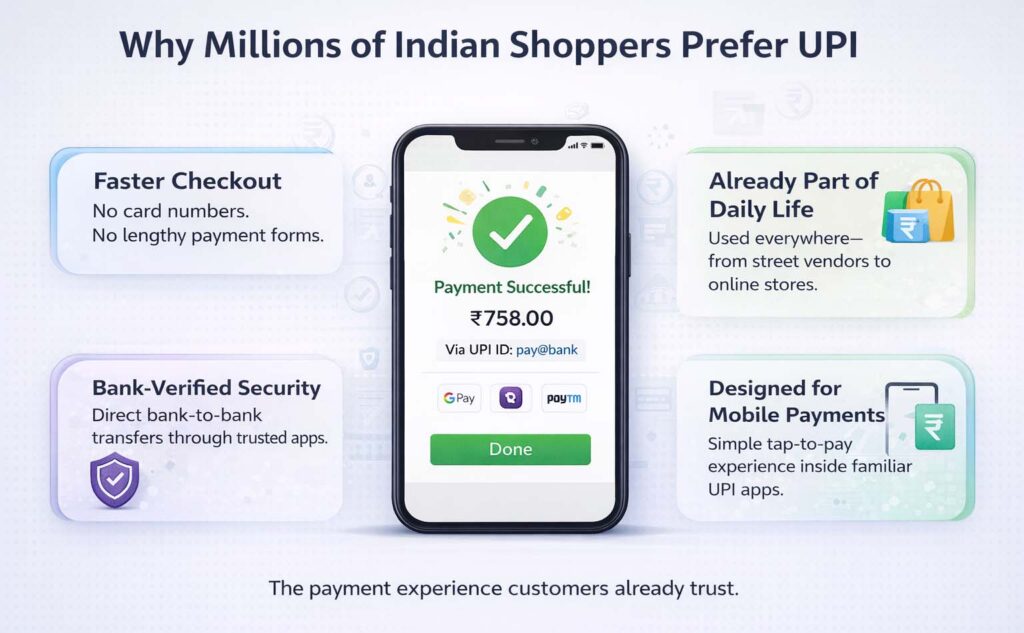
From a shopper’s perspective, it often takes less than 10 seconds to complete a payment through UPI.
In comparison, entering card details or navigating net banking flows feels slower and more complicated.
This difference might seem small, but in eCommerce, small moments of friction can have large effects.
When a payment method matches what customers already use in their daily lives, checkout becomes easier.
And easier checkout often means higher conversion rates.
Many online store owners focus heavily on:
But checkout design often gets less attention.
Yet this is where the final purchase decision happens.
Industry research from Baymard Institute suggests that checkout friction is one of the leading causes of cart abandonment in online shopping.
While there are many reasons customers abandon carts, payment options frequently play a role.
If the payment method feels unfamiliar or inconvenient, customers sometimes delay the purchase or leave the site altogether.
Adding commonly used payment methods helps reduce that friction.
In India, UPI has become one of those expectations.
UPI works particularly well for online stores because it simplifies the final step of a purchase.
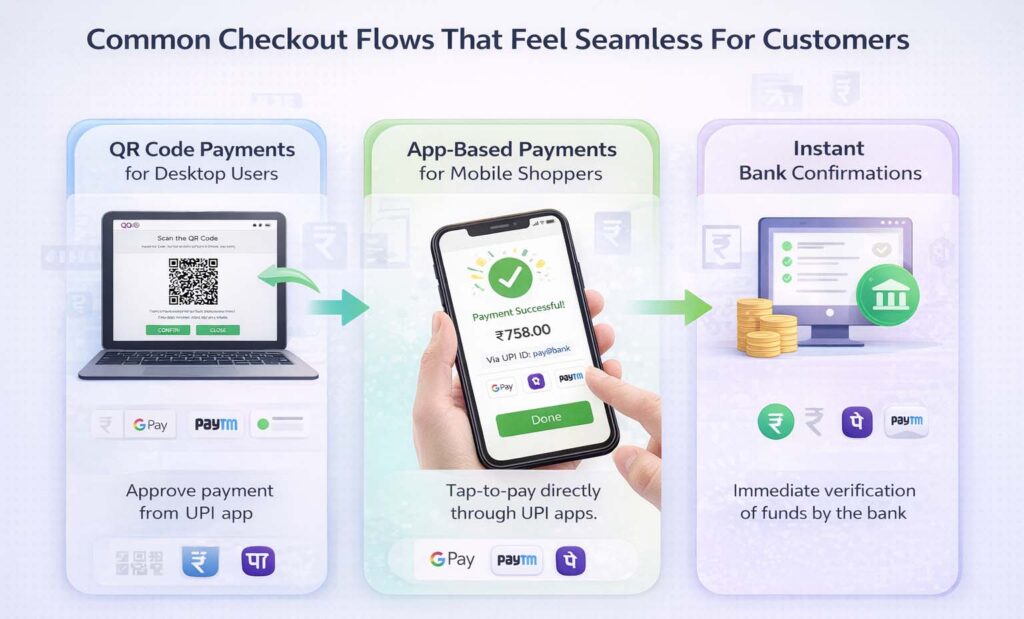
Instead of typing card numbers or waiting through OTP steps, they simply approve the payment through their UPI app.
For businesses, the benefits often include :
As mobile commerce continues to grow in India, payment methods designed for mobile use naturally become more important.
UPI fits this shift well.
For store owners considering UPI, the next logical question is simple :
What does the checkout experience actually look like for the customer?
When UPI is integrated into an Odoo eCommerce store, the process becomes very straightforward.
A typical checkout flow looks like this :
1️⃣ The customer adds products to their cart and proceeds to checkout.
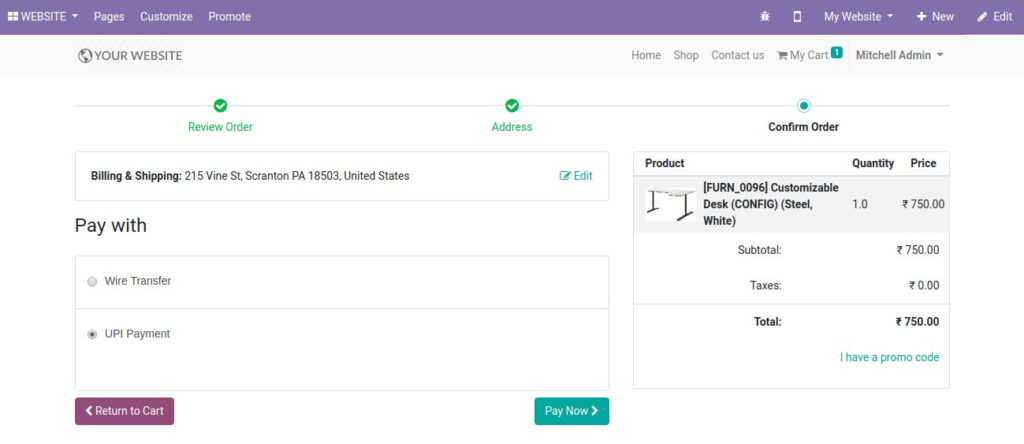
2️⃣ At the payment step, the customer selects UPI Payment as their payment method.
3️⃣ Depending on the device they are using, two options are available :
For desktop users
A UPI QR code appears on the checkout page.
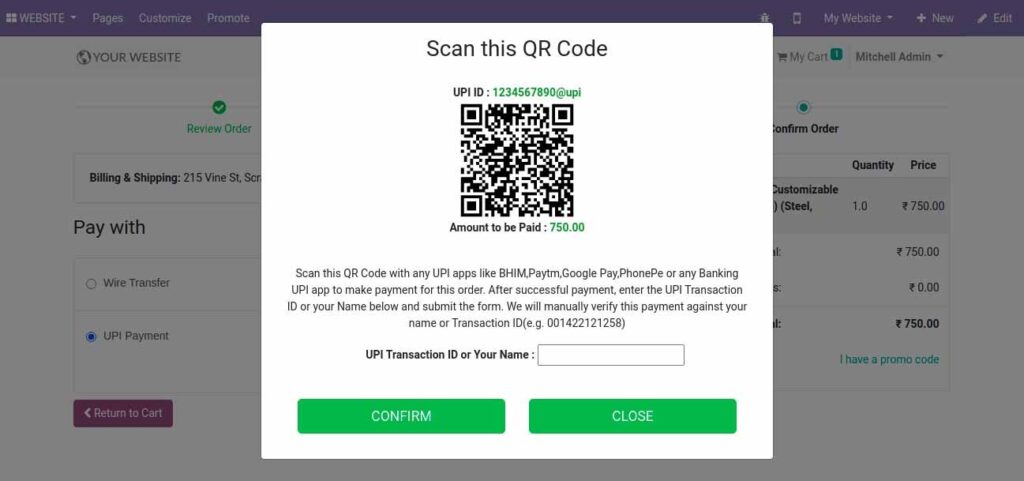
The customer simply scans the QR code using any UPI app such as Google Pay, PhonePe or Paytm.
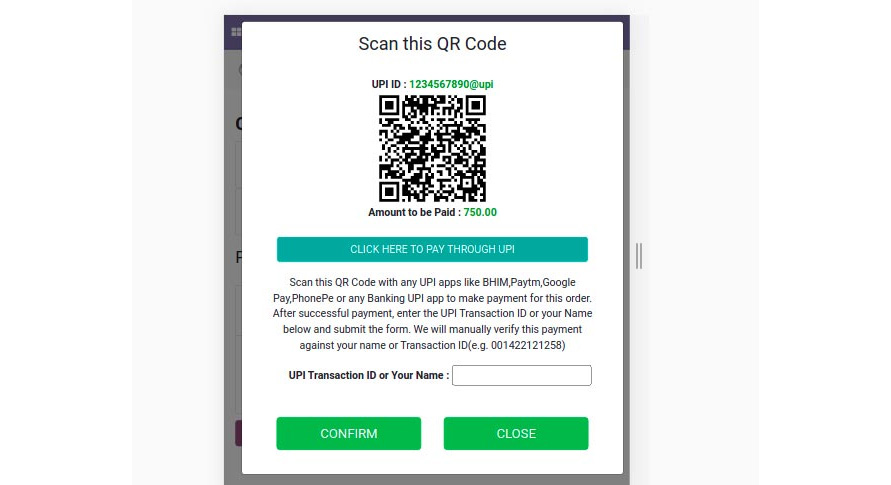
For mobile users
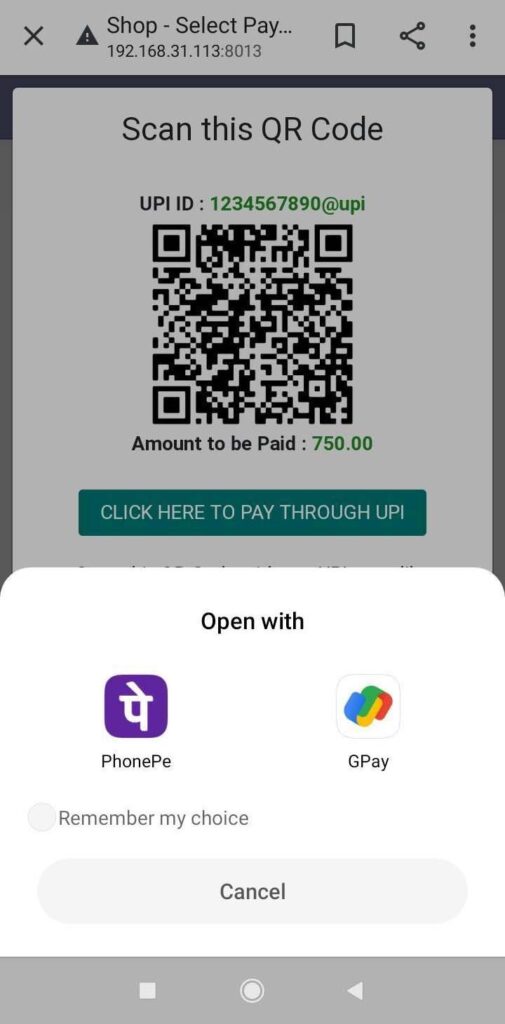
4️⃣ The customer completes the payment using their preferred UPI app.
5️⃣ After payment, the customer enters their UPI transaction ID or name to confirm the order.
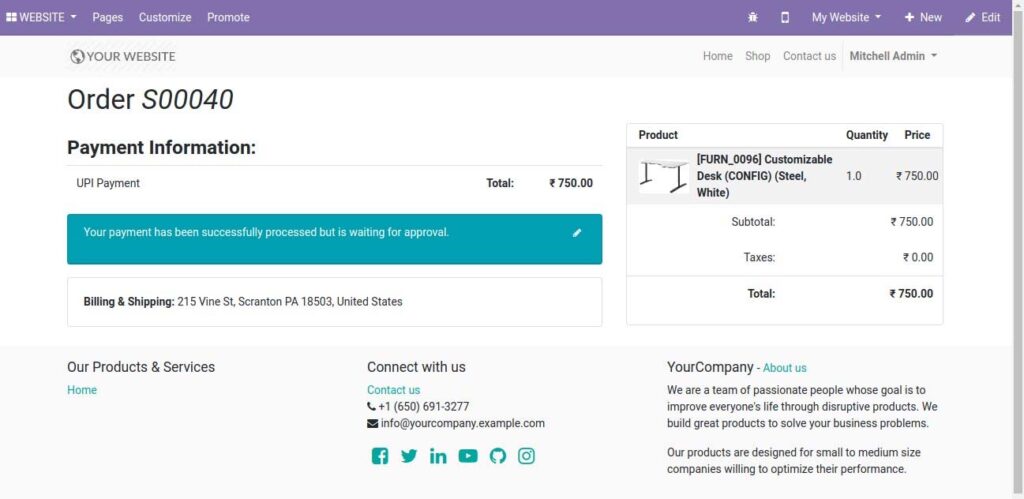
Once submitted, the order is created and can be verified by the store operator.
This approach keeps the payment process simple for customers while still allowing businesses to maintain control over order verification.
Across India’s digital commerce ecosystem, businesses are adjusting their payment experiences.
Many stores now combine multiple payment options :
The goal is simple : Meet customers where they already are.
Platforms that allow businesses to integrate multiple payment methods within their operational systems make this process easier.
For stores operating on ERP-driven platforms like Odoo, payment integration can also connect directly with backend processes such as :
This reduces manual work for operations teams while improving visibility into transactions.
If you are evaluating UPI integration for your eCommerce business, there are a few practical aspects worth considering.
1. Customer experience
The checkout flow should feel simple for users on both desktop and mobile devices.
QR scanning and direct UPI app payments often provide the smoothest experience.
2. Backend tracking
Payment details should be easily traceable inside your system so finance and operations teams can reconcile transactions efficiently.
3. Platform compatibility
The payment solution should work naturally with your existing eCommerce and ERP systems.
4. Operational clarity
Businesses should be able to confirm transactions clearly without creating extra manual processes.
When these elements come together, payment integration becomes less about technology and more about improving how smoothly customers complete purchases.
For businesses already running their online stores on Odoo, integrating UPI payments can also simplify backend operations.
With the UPI integration developed by Pragmatic Techsoft, businesses can :
1.Accept UPI payments through QR codes and UPI apps
2. Allow customers to pay using Google Pay, PhonePe, Paytm, BHIM and other UPI apps
3. Capture the UPI transaction ID directly within Odoo
4. Track orders and payment details from the backend
5. Store the transaction reference automatically in the Acquirer Reference field
This means operations teams can easily trace payment information while managing orders directly within the Odoo system.
Instead of handling payment confirmations manually across multiple platforms, businesses can keep everything connected within their existing ERP workflow.
India’s payment ecosystem has changed dramatically over the last few years, and UPI is now at the center of that shift.
For eCommerce businesses, adapting to these expectations is no longer optional. The checkout experience must reflect how customers already prefer to pay.
For businesses operating on Odoo eCommerce, enabling UPI payments can be a practical step toward reducing checkout friction and improving payment convenience for customers.
At Pragmatic Techsoft, we have spent 17+ years helping businesses implement ERP-driven digital systems, delivering over 400 successful projects across industries.
Our UPI Payment Gateway Integration for Odoo eCommerce allows businesses to offer customers a seamless payment experience while maintaining clear transaction visibility inside Odoo.
By combining QR-based payments, mobile app payments and backend transaction tracking, businesses can support the payment methods customers already trust – without complicating their operations.
As digital payments continue to evolve in India, aligning your store’s checkout with customer behavior may be one of the simplest ways to improve the overall buying experience.
Every store setup is slightly different and the best way to understand how UPI can fit into your checkout experience is to see it in action.
Our team at Pragmatic Techsoft can walk you through how UPI payments integrate with Odoo eCommerce and how transactions can be tracked directly inside your backend.
💡If your store isn’t running on Odoo yet, our team can also help you set up an Odoo eCommerce platform built for modern payment experiences like UPI.
In many cases, yes. UPI is widely used across everyday transactions in India, which makes it familiar and convenient for many shoppers. This familiarity often encourages faster payment decisions.
While results vary by store and industry, reducing payment friction generally improves the likelihood that customers complete their purchases.
Yes. When integrated properly with platforms like Odoo, UPI payment information can be linked with order records and transaction tracking.
Yes. Desktop users typically scan QR codes with their mobile apps, while mobile users can often open their UPI apps directly.
With the right integration approach, businesses can enable UPI payments without significantly altering their existing checkout flow.
Yes. With the right UPI integration, customers can complete payments using popular UPI apps such as Google Pay, PhonePe, Paytm, and BHIM. The payment can be initiated through QR codes or directly through UPI apps on mobile devices.

March 10, 2026




Leave a Reply
You must be logged in to post a comment.