
If you operate in retail, grocery, pharmacy, hospitality or eCommerce, you’ve probably noticed a consistent trend : delivery costs are climbing.
Fuel prices fluctuate unpredictably.
Driver wages are rising.
Urban congestion slows routes.
Customer expectations are higher than ever.
At the same time, customers expect :
Delivery is no longer just logistics. It is a brand experience.
The real challenge businesses face today isn’t how to deliver faster. It’s how to reduce last mile delivery costs without sacrificing customer trust.
And the answer lies in operational structure – not cost cutting.
Last mile delivery is costly not because of long distances – but because of fragmentation.
Each order :
Unlike bulk shipping, last mile logistics operates at micro-scale.
Costs increase due to :
When dispatch relies on calls, spreadsheets, or chat groups, inefficiencies multiply.
At scale, this becomes margin erosion.
Most companies calculate delivery cost as :
Fuel + Driver salary
But that is incomplete
The true cost of inefficient last mile delivery includes :
For example, a single failed delivery means :
Multiply that across dozens of orders weekly and delivery becomes one of the biggest silent cost drivers in your business.
Reducing last mile delivery costs requires eliminating operational friction, not trimming visible expenses.
Some businesses attempt to reduce delivery expenses by :
Short-term savings may appear.
Long-term damage follows.
Delivery is the final customer touchpoint. If reliability drops, customers don’t blame operations – they blame your brand.
Cost reduction must improve efficiency, not degrade service.
Failed deliveries are one of the largest cost contributors.
Using OTP verification or digital signature confirmation ensures every delivery is securely acknowledged.
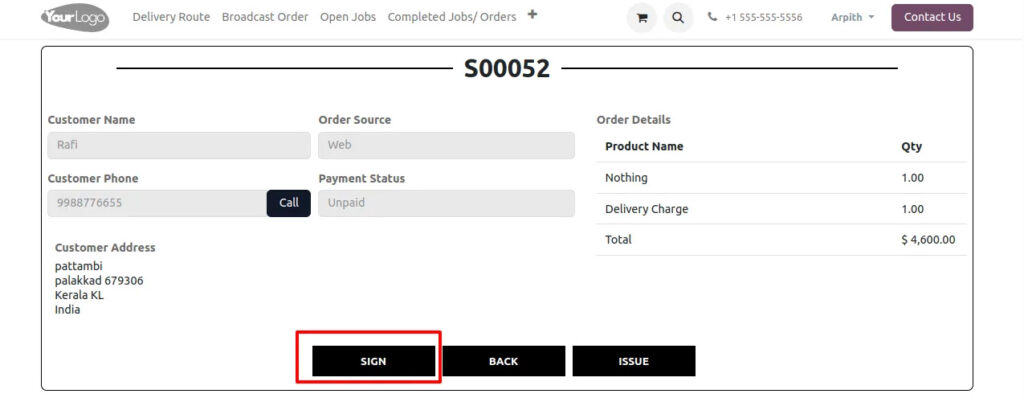
When each drop-off has verified proof :
Proof of delivery is not just security – it is cost control.
Manual assignment leads to delays and imbalance.
A structured delivery system allows :
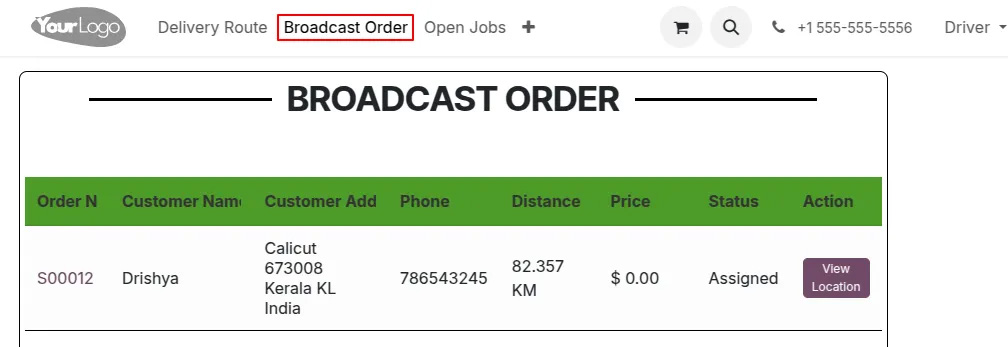
When drivers can see the location and details before accepting, rejection rates drop and productivity improves.
Higher deliveries per shift, lower cost per delivery.
Instead of dispatch teams chasing drivers, broadcast systems push orders to available drivers instantly.
If an order remains unaccepted for a defined period, it automatically rebroadcasts.
This reduces :
Automation replaces coordination chaos.
Assigning deliveries randomly increases fuel usage.
Grouping deliveries by :
improves route density.
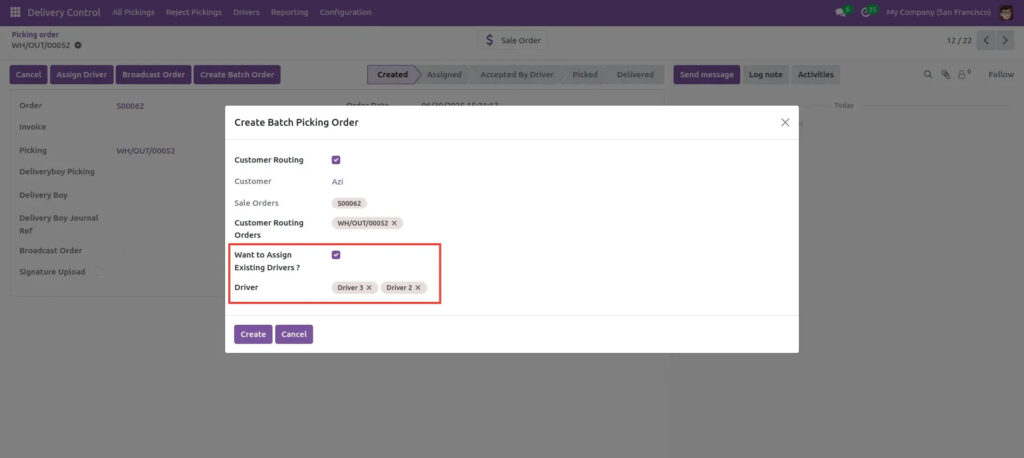
Batch delivery dramatically increases driver productivity without increasing fleet size.
Drivers perform better with clarity.
When drivers can :
conflict reduces and efficiency improves.
Visibility into assigned, delivered and rejected orders creates accountability naturally.
COD remains common in many markets.
Without structured mapping :
When driver collections are directly linked to accounting entries, transparency improves and leakage reduces.
Financial discipline is part of delivery optimization.
Every “Where is my order?” calls – cost money.
Live tracking reduces :
When admins and customers have visibility, operations become proactive instead of reactive.
Transparency reduces chaos.
Delivery feedback provides measurable insight.
Linking customer ratings to driver performance allows businesses to :
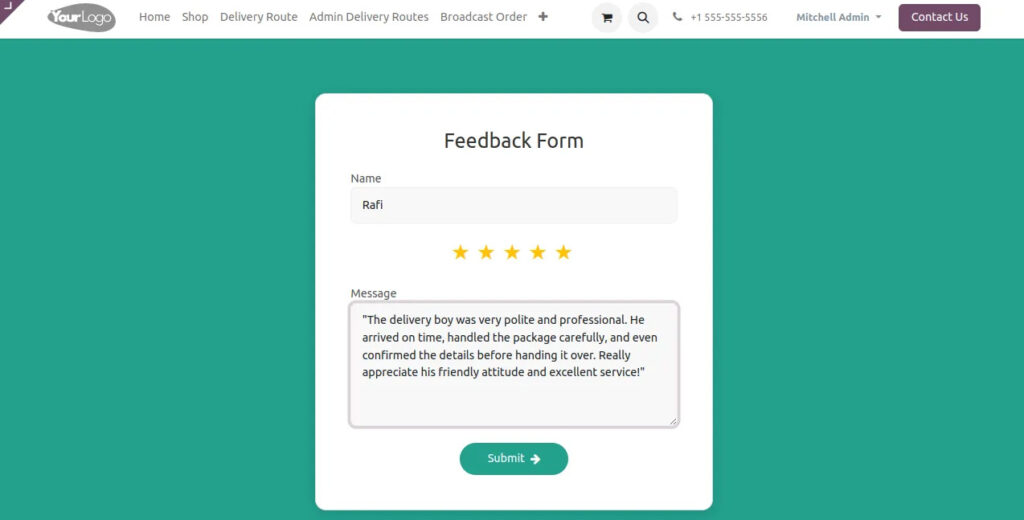
Retention improves when service improves – lowering overall acquisition costs.
Cost reduction becomes powerful when delivery is fully integrated with operations.
In a structured system –
1) Orders from POS, Website or Sales flow into a centralized delivery dashboard.
2) A picking order is generated, ensuring inventory accuracy.
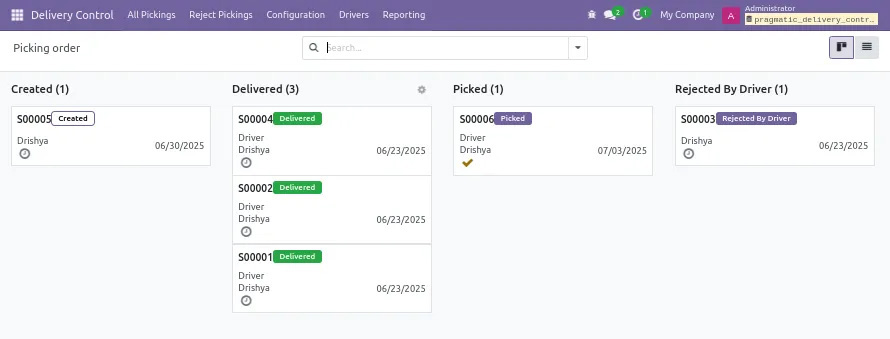
3) The driver is assigned or the order is broadcast to available drivers.
4) Drivers accept via mobile or web portal.
5) Admin marks items as picked, ensuring stock movement clarity.
6) Live tracking updates order status in real time.
7) Delivery is confirmed via OTP or digital signature.
8) COD collections are mapped to accounting entries.
9) Customer feedback is captured.
10 MIS reports track performance and efficiency.
When sales, inventory, driver management, verification, and accounting are connected, duplication reduces and clarity increases.
That integration is what reduces delivery cost predictably.
Secure verification eliminates ambiguity.
OTP confirmation and digital signatures protect against :
By reducing refund risk and resolution time, structured proof of delivery protects margins directly.
Savings occur when assignment becomes strategic.
Features like :
create structured delivery flow.
When the system manages logic, dispatch overhead reduces significantly.
Delivery cost reduction is incomplete without financial clarity.
Mapping COD collections to drivers and accounting ensures:
Financial transparency strengthens operational confidence.
Data-driven delivery operations allow tracking of :
With structured reporting, optimization becomes measurable – not speculative.
Predictable data leads to predictable margins.
Reducing last mile delivery costs is not about lowering service.
It’s about :
Lower cost per delivery.
Higher customer trust.
Better operational clarity.
That’s sustainable efficiency.
At Pragmatic Techsoft, we’ve spent 17+ years building operationally structured Odoo systems for businesses across retail, hospitality, manufacturing and distribution.
What we’ve consistently observed :
Delivery problems rarely come from drivers.
They come from disconnected systems.
That’s why our All in one driver and delivery app is designed to :
• Integrate directly with POS, Sales and Website orders
• Generate structured picking workflows
• Enable driver assignment and broadcast logic
• Provide real-time tracking visibility
• Secure deliveries with OTP or digital signature
• Map COD collections directly to accounting
• Capture customer feedback
• Deliver MIS reporting for optimization
The result?
Lower cost per delivery
Fewer disputes
Better driver productivity
Higher customer confidence
Without increasing fleet size.
Ready to Reduce Delivery Costs Without Reducing Service?
If you’re experiencing :
Businesses don’t struggle because of effort.
They struggle because systems lack structure.
If delivery complexity is increasing and you’re seeing :
it may be time to evaluate your delivery workflow.
Structured delivery management especially when integrated with sales, inventory and accounting – transforms last mile delivery from chaotic cost center into controlled growth function.
Optimization begins with visibility.
1) What is last mile delivery?
The final stage of logistics where goods move from a distribution hub to the end customer.
2) Why are last mile delivery costs increasing?
Fuel costs, driver wages, inefficient routing, failed deliveries and higher customer expectations contribute significantly.
3) How can I reduce delivery costs without hurting customer experience?
By implementing intelligent routing, broadcast assignment, proof of delivery, COD tracking and real-time visibility.
4) Does real-time tracking reduce operational costs?
Yes. It reduces support calls, prevents disputes and improves transparency.
5) What features should a modern delivery management system include?
Smart assignment, broadcast logic, batch routing, OTP/signature verification, COD mapping, live dashboards and MIS reporting.





Leave a Reply
You must be logged in to post a comment.