
Why Selling on Faire Feels So Smooth in the Beginning
For many brands, Faire is the easiest way to enter wholesale.
You don’t need trade shows.
You don’t need a sales rep network.
You don’t need to build retailer trust from scratch.
Faire provides –
- A ready-made marketplace of retailers
- Built-in credit terms like Net-60
- Risk-reducing mechanisms for first orders
- Product discovery through search and AI recommendations
- Visibility tools like Promoted Listings
- Order tracking dashboards
This reduces the friction of getting retailers to place that first order. It shortens the time between “we want to try wholesale” and “we are receiving wholesale orders.”
At this stage, the process feels clean.
Orders come in. You fulfill them. Revenue grows.
And because volume is still moderate, manual processes don’t feel overwhelming.
But wholesale doesn’t stay small for long.
What Changes When Order Volume Increases
The shift happens gradually. At first, you’re handling :
- 10–20 orders per month
- A manageable number of retailers
- A limited SKU catalog
Then you start seeing :
- Repeat customers
- Larger orders
- More product variants
- More geographic reach
With growth comes repetition. And repetition exposes inefficiencies.
Now someone in your team is spending time –
- Exporting order data
- Re-entering it into your internal system
- Checking whether a retailer already exists
- Verifying SKU alignment
- Correcting pricing mismatches
What once took minutes now takes hours per week.Growth itself isn’t the problem. Unstructured growth is.
The Operational Side of Wholesale No One Talks About
From the outside, wholesale looks simple.
Retailer orders → brand ships → invoice paid
But operationally, wholesale businesses deal with :
- Case quantities
- Bulk pricing tiers
- Variant combinations
- Retailer-specific adjustments
- Credit tracking
- Margin analysis
- Reorder frequency monitoring
Unlike direct-to-consumer ecommerce, wholesale often involves fewer customers but significantly higher order complexity.
This means accuracy matters more.
A minor mismatch in SKU mapping or customer data doesn’t just create confusion – it impacts inventory, financial reconciliation, and retailer trust.
Wholesale success isn’t just about acquiring retailers.
It’s about managing them cleanly over time.
Where Most Faire Sellers Start Feeling the Strain
Here’s what we consistently observe in growing Faire brands.
Manual Order Imports
Teams export CSV files from Faire and manually enter orders into their internal systems.
This introduces :
- Line item entry errors
- Missed product variants
- Pricing adjustments done manually
- Duplicate import risk
It works – until order volume increases.
Customer Record Duplication
Retailers reorder using :
- Slightly different company names
- Different email contacts
- Updated phone numbers
Without intelligent matching logic, systems create new entries.
Now you have :
Retailer A
Retailer A LLC
Retailer A, Inc.
Three records. One business.
Over time, this fragments sales history and makes reporting unreliable.
SKU & Variant Misalignment
Wholesale catalogs grow quickly.
Variants include :
- Size
- Color
- Packaging type
- Case quantity
If your system doesn’t match products precisely by SKU or Variant ID, you’ll experience:
- Incorrect stock levels
- Pricing inconsistencies
- Fulfillment errors
These mistakes erode operational confidence.
Why Marketplace Tools Alone Aren’t Enough
Faire is designed to facilitate transactions and discovery.
It provides visibility, order dashboards and buyer communication tools.
But it is not built to function as –
- A centralized accounting system
- A full ERP
- A structured multi-company inventory system
- A long-term operational data backbone
Marketplace dashboards show you what happened on the platform.
They do not centralize your entire business data.
As your wholesale presence expands, your backend system must become more disciplined.
And discipline requires synchronization.
The Concept of “Clean Wholesale Data”
Clean wholesale data is not about aesthetics.
It’s about reliability.
It means :
- Each retailer exists once in your system
- Orders are imported exactly once
- SKUs are mapped consistently
- Variants are tracked accurately
- Pricing updates are reflected correctly
- Reports generate without manual cleanup
When your data is clean :
- You trust your revenue reports
- You understand reorder patterns
- You identify high-value retailers
- You manage stock confidently
When data is messy :
- You hesitate before making decisions
- You double-check everything
- Growth feels stressful instead of exciting
Clean data reduces friction.
What Proper Wholesale Synchronization Looks Like
A structured synchronization system between Faire and your internal operations must include :
- Automated order import
- Pagination to handle large volumes
- Batch limits (10–50 orders)
- Date-based filtering to pull only new data
- Intelligent customer matching
- Fuzzy logic (90%+ similarity detection)
- Automatic new customer creation
- Duplicate order prevention
- SKU & Variant ID matching
- Automatic price updates
- Wizard-based review for manual confirmation
- Multi-company support
Each of these safeguards reduces a specific operational risk.
This is not over-engineering. This is future-proofing.
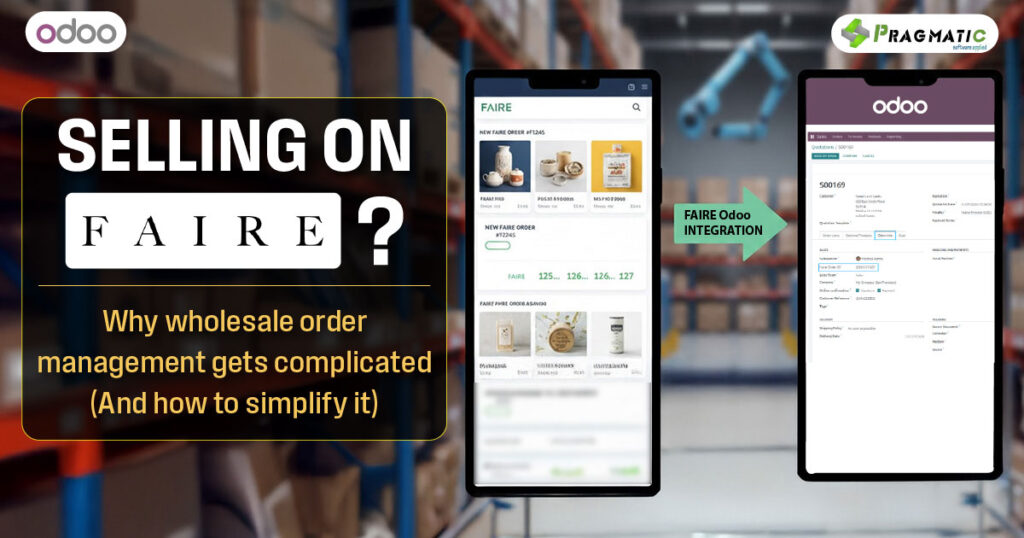
Introducing the Faire Odoo Integration by Pragmatic TechSoft
To address these operational challenges, Pragmatic TechSoft developed the Faire Odoo Integration
Compatible with Odoo 16 Community & Enterprise, this module connects directly with the Faire Wholesale API V2 and enables structured synchronization between Faire and your backend system.
It is built specifically for wholesale brands who :
- Are growing on Faire
- Want to eliminate manual imports
- Need clean customer data
- Care about accurate SKU mapping
- Want structured batch-based synchronization
It focuses on one goal – Maintaining clean wholesale data as order volume scales.
How This Integration Solves Real Operational Problems
Automated Order Import
Instead of manually exporting and entering orders, the system :
- Imports orders using pagination
- Supports date filtering
- Allows configurable batch limits
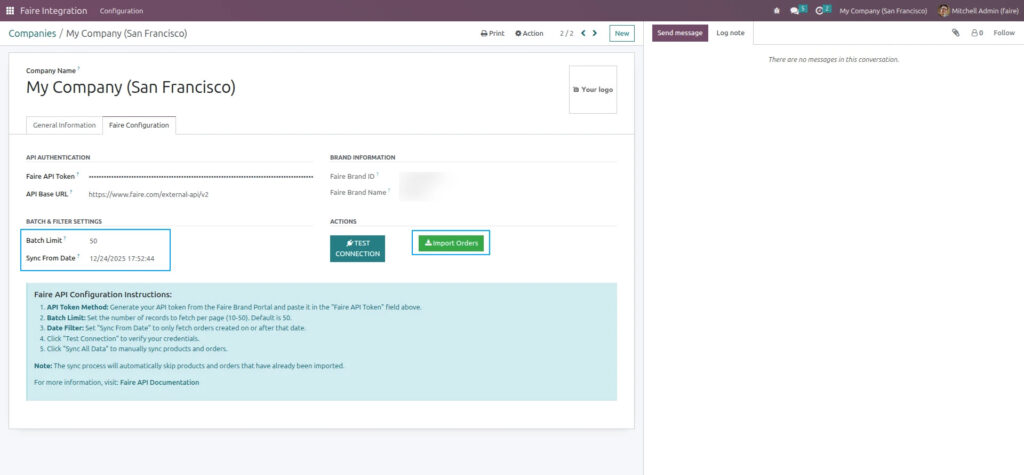
This ensures only new data enters your system.
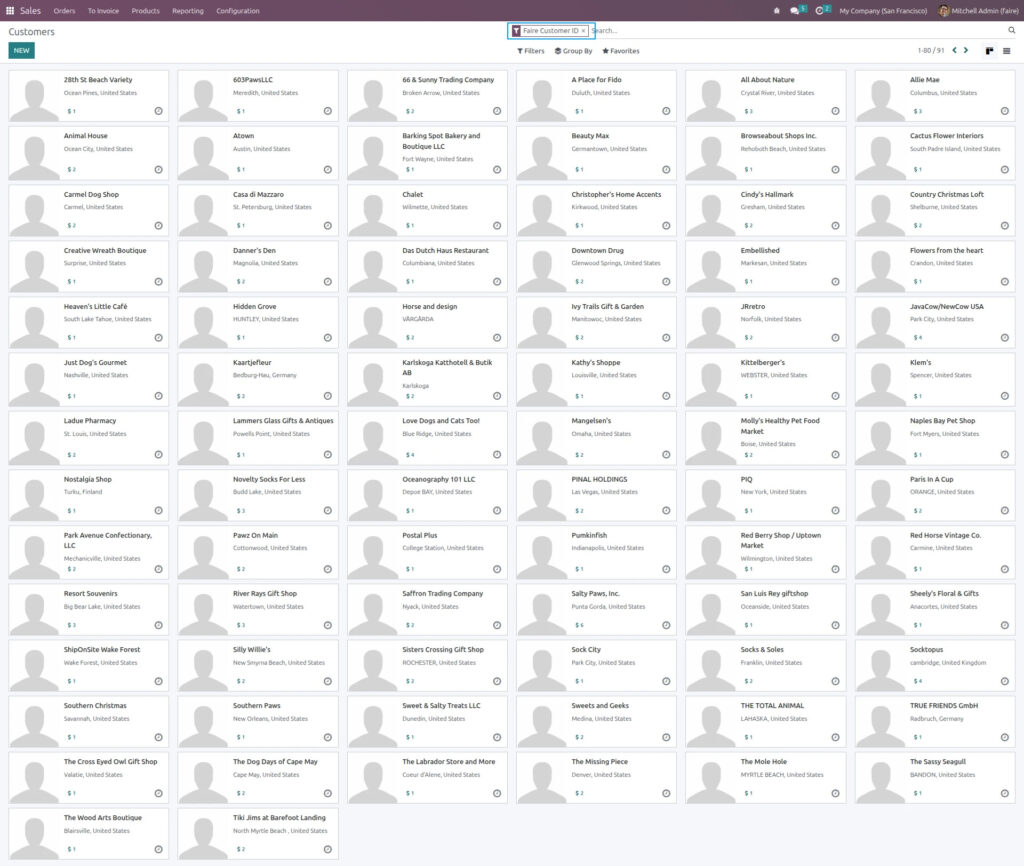
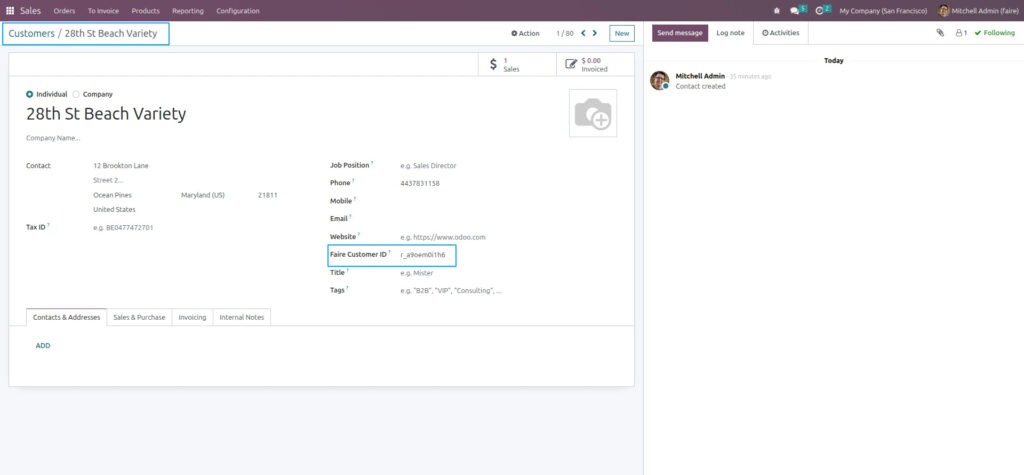
Intelligent Customer Matching
The integration :
- Matches by Faire Customer ID
- Matches by phone number
- Flags 90%+ fuzzy name similarity for review
- Creates new customers only when no match exists
This significantly reduces duplication and protects CRM clarity.
Product & Variant Synchronization
Products are matched using :
- SKU
- Faire Variant ID
Pricing updates automatically, reducing mismatches between systems.
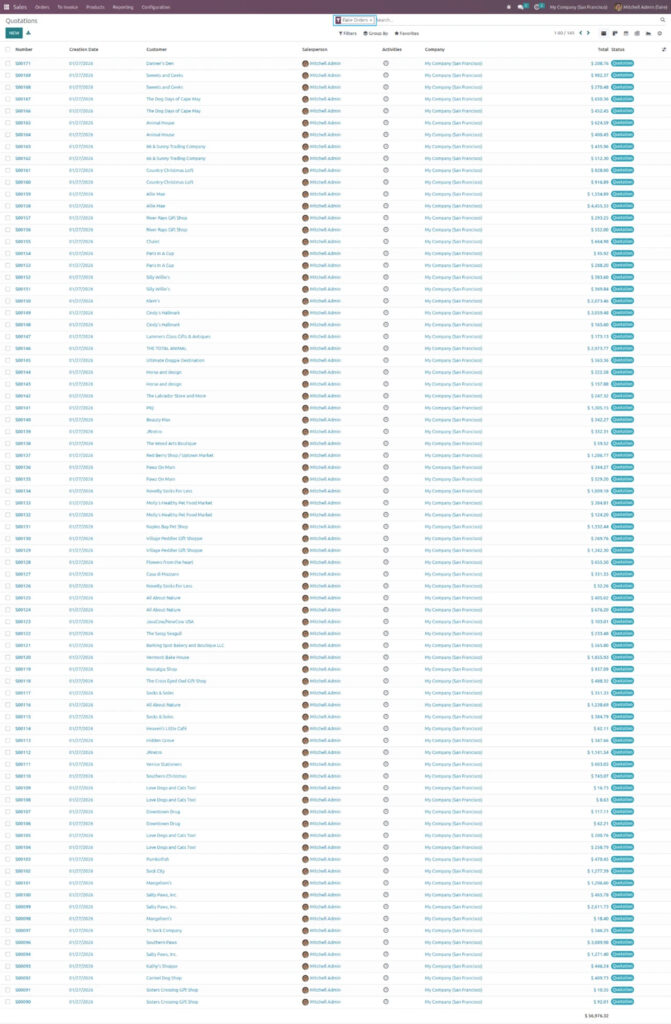
Duplicate Prevention
Repeat orders and duplicate customer entries are blocked during import.
This preserves data integrity.
Controlled Review via Wizard
Ambiguous cases can be reviewed before final confirmation.
Automation with control – not blind syncing.
When Should a Faire Brand Consider This?
You should consider structured integration if :
- You process more than 30 wholesale orders monthly
- Your SKU catalog is expanding
- Manual imports are consuming time
- Duplicate customers are appearing
- Reporting requires manual correction
- Growth feels operationally heavy
Integration is not a luxury.
It becomes necessary as wholesale scales.
Final thoughts
Selling on Faire creates opportunity.
But opportunity without operational structure creates friction.
Wholesale order management becomes complicated when systems aren’t synchronized properly.
The Faire Odoo integration simplifies that complexity not by replacing what works, but by strengthening what supports it.
If this sounds like what your team is starting to experience, let’s talk – we’ll walk you through how the Faire Odoo Integration fits into your current workflow.
Built by Pragmatic Techsoft, an Odoo implementation partner with 17+ years of expertise into implementing smart scalable odoo solutions for businesses globally, this integration is designed for serious wholesale brands.
FAQs
1) Does this replace Faire?
No. It strengthens your backend while you continue selling on Faire.
2) Is fuzzy matching accurate?
Yes. Only high-similarity matches are flagged and reviewed.
3) Can I import incrementally?
Yes. Date-based filtering ensures selective sync.
4) Does it auto-sync inventory?
Inventory endpoints exist, but automatic inventory sync is not implemented in this version.