
The quiet panic of the empty desk
It’s a Tuesday morning. Your Operations Manager – the one who has been with you since the
“garage days”- is finally taking a well-deserved week off. They’ve earned it.
But by 10:00 AM, the quiet panic starts to set in.
❌A vendor calls asking about a pending bill. You check the inbox, but you don’t have the password.
❌A client asks for a project update, but the latest notes are sitting in a notebook on a desk three
states away.
❌Dispatch is delayed because the “usual guy” knows the workaround for the printer and he’s currently offline on a beach in Mexico.
Most founders mistake this for a staffing issue. They think, “I need more people like him.”
In reality, this is the vacation stress test and if your business is failing it, you don’t have a talent problem.
You have a system design problem.
It’s not a people problem; it’s a system design problem
When a business is small, “tribal knowledge” is efficient. You shout across the room, you get an answer and you move on. But as you scale, those shouts become Slack messages, then emails and eventually, they become “lost data.”
A healthy company should not freeze because one employee is on leave. It should continue because the work, the status and the decision trail are visible to the right people.
That is the real shift.
The goal is not to replace valuable employees.
The goal is to stop making them carry the entire business in their memory.
Because if the knowledge of how to run a process lives exclusively in a human brain rather than a shared digital record, that person isn’t an employee anymore – they are a single point of failure.
The high cost of “tribal knowledge”
Tribal knowledge feels harmless when things are running.
But as the company grows, it becomes a hidden tax on operations.
It shows up as :
- Approval bottlenecks, because only one person knows what is pending.
- Delayed payments, because vendor bills sit in a private inbox or depend on manual follow-up.
- Project confusion, because the latest update was shared informally instead of on the record.
- Dispatch delays, because the issue is known by someone, but not documented in a system.
- Slow onboarding, because new employees have to “shadow” people just to understand how work actually moves.
This is why many growing businesses feel busy all the time without feeling clear.
The workload is not always the problem.
The lack of visible, shared operational context is.
When status is not logged in a trusted system, every question becomes a follow-up.
Every follow-up becomes a delay.
Over time, teams spend more energy chasing information than acting on it.
The HR perspective : Giving your team the right to disconnect
We often talk about systems in terms of efficiency, but there is a massive human element here.
When an employee knows the business will collapse if they don’t check their email on vacation, they never truly rest.
This leads to burnout, resentment and eventually, turnover.
By moving to a centralized system like Odoo, you are giving your employees a “breather.”
You are telling them : “The system has your back. Your work is logged, your status is visible and you can
truly go offline.”
This creates a culture of trust and sustainability, rather than one of frantic dependency.
Moving from Brains to Databases : How Odoo bridges the gap
If a company is not tracking work properly today, the problem is rarely limited to one department.
It shows up everywhere.
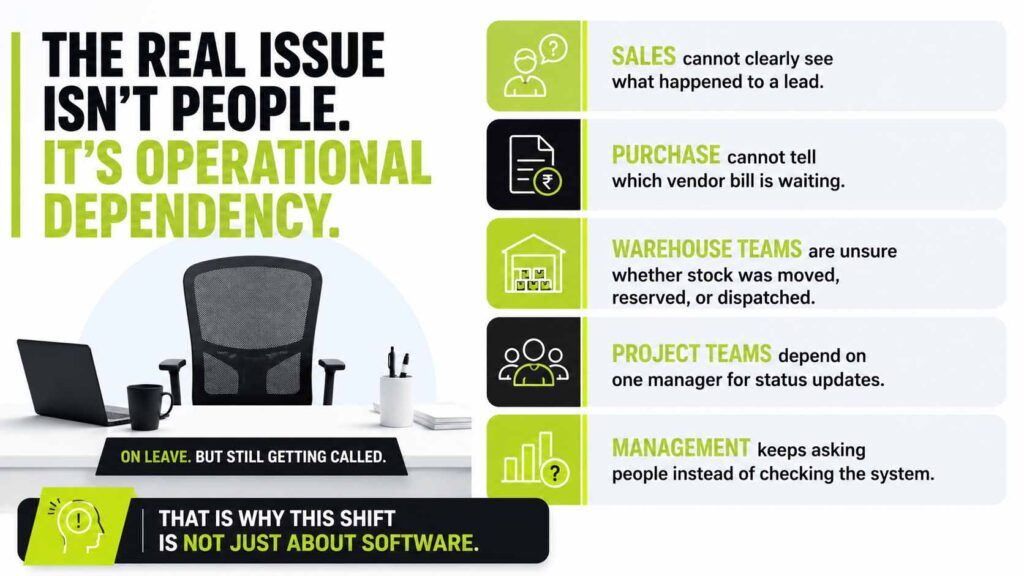
It is about making every department less dependent on one person’s memory.
Odoo 19 helps by turning daily work into shared operational records that other people can see, follow and act on.
- Lead status should not live in one salesperson’s head
In many growing businesses, lead follow-up is still highly person-dependent.
- One salesperson knows which opportunity is serious
- One person remembers why a lead went cold
- One manager knows which deal is waiting on pricing, approval or customer response.
That becomes risky very quickly.
Odoo 19 CRM helps track leads and opportunities through a visible pipeline, with stages, activities, forecasts and next actions attached to the record.
Instead of asking a salesperson for a status update, managers can review the pipeline and see where each deal stands and what needs to happen next.
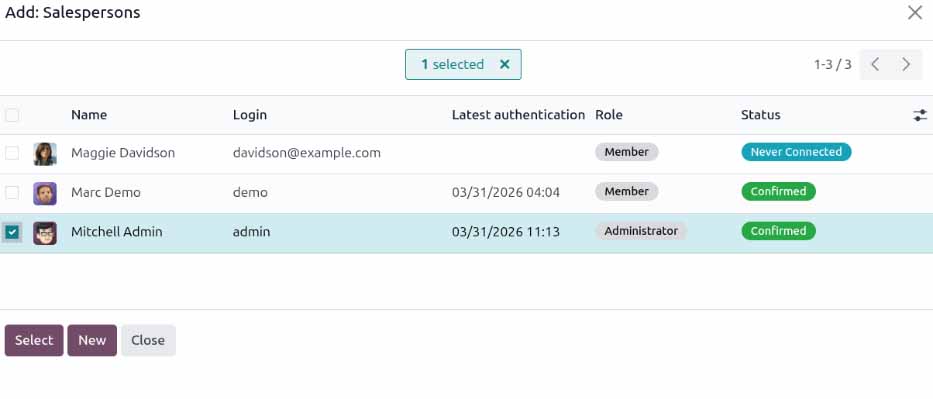
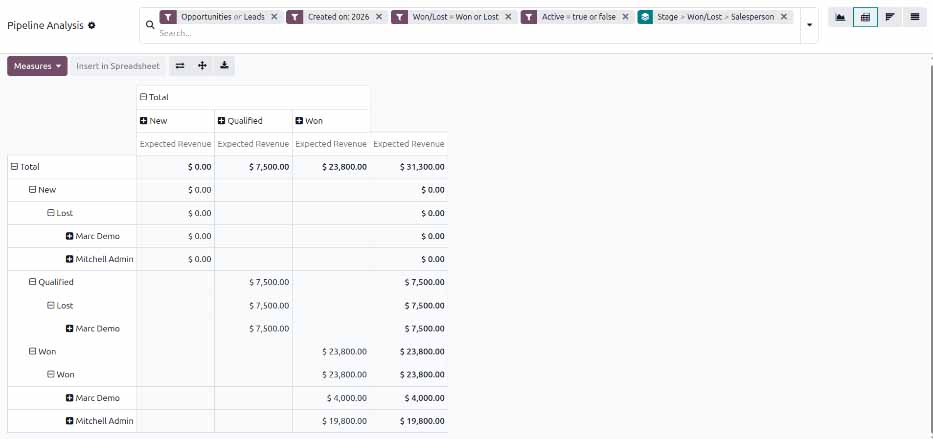
This matters because sales continuity should not depend on whether one employee is online that day.
- Stock movement must be visible, not assumed
Inventory problems often look like stock problems when they are actually visibility problems.
The issue is not always whether stock exists.
It is whether anyone can clearly see :
- What was received
- What was reserved
- What moved internally
- What was dispatched
- What is still pending
Odoo 19 Inventory module includes stock reports, dashboards and moves history that track product movements across locations, transfers, statuses and dates.
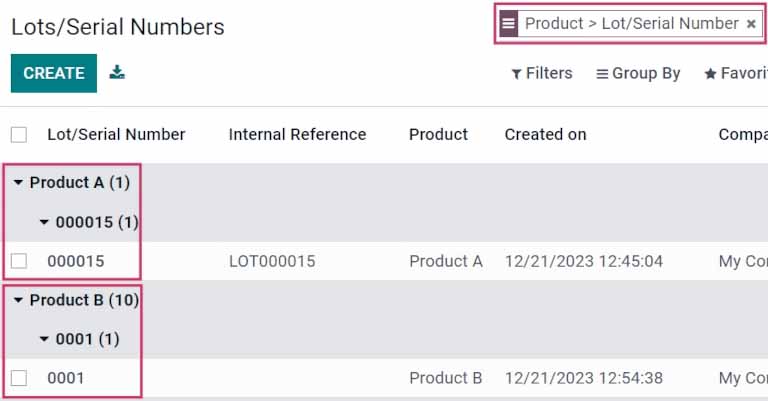
The Moves History report can show whether a movement is incoming, outgoing, internal, in progress, partially available or done, which makes stock activity easier to verify without relying on verbal updates from warehouse staff.
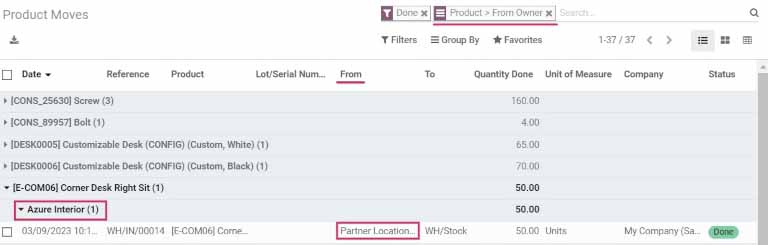
That changes the conversation from
“Can someone check what happened?” to “Let’s check the movement record.”
That is a major difference in operational maturity.
- Bills and approvals should not disappear into inboxes
One of the biggest reasons teams interrupt employees on leave is because bill status is unclear.
- Did the invoice arrive?
- Was it entered?
- Was it matched to a purchase order?
- Is it waiting for approval?
- Has it already been paid?
Odoo 19 helps centralize vendor bills and supporting documents in shared workflows, while OCR/AI digitization can extract key invoice data such as vendor, date, amount and taxes for review. That makes bill handling less dependent on a single inbox and easier for the next person to continue.
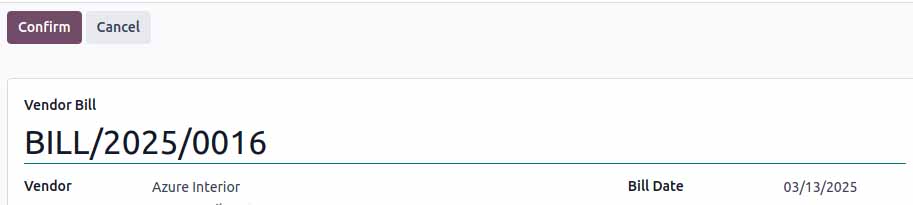
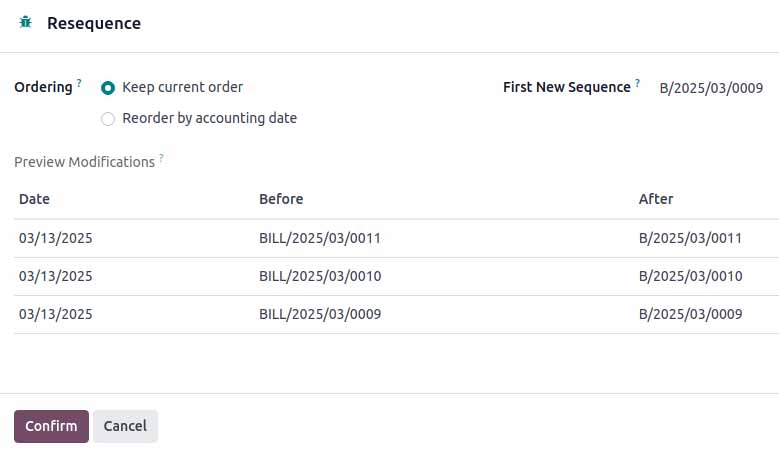
This is one of the clearest ways a system helps employees disconnect.
If the bill is in the system and the status is visible, finance does not need to chase the person who is absent.
- Status should be visible without a phone call
In many businesses, project status still depends too heavily on one coordinator or manager.
If a customer asks for an update, someone has to call the person “handling it.”
That may work in a small team, but it does not scale.
Odoo 19 Project, Planning and Gantt views help make assignments, schedules, workload and task progress visible to the wider team.
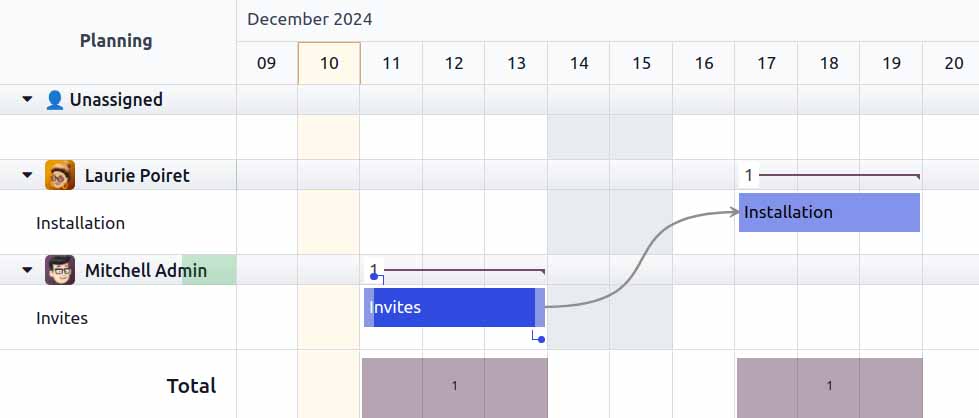
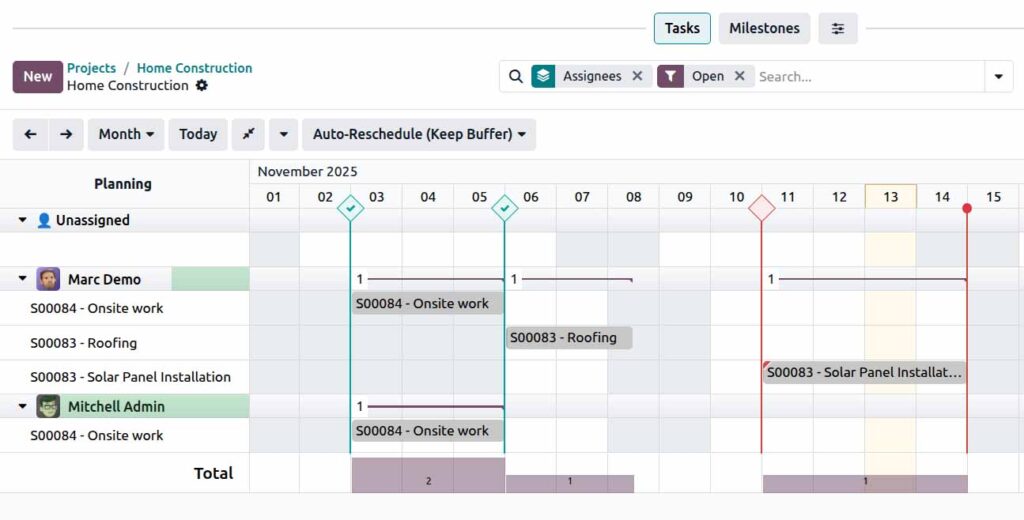
Instead of relying on one person’s memory, businesses can use task records, timelines and planning views to understand where work stands and what is blocked.
That does not just improve planning.
It improves handover.
And handover is what allows people to actually go offline.
- The “why” must stay with the record
A business does not only lose visibility because updates are missing.
It also loses visibility because context is scattered.
- A status might exist in WhatsApp
- An approval might be buried in email
- A key explanation might have been shared verbally
Odoo’s Chatter and Discuss module help keep internal notes, updates, activities and attachments connected to the relevant business record instead of disappearing into isolated conversations.
That gives teams a more reliable operational trail when the usual owner of the work is unavailable.
This is what turns a company from people-dependent to process-supported.
The system does not replace judgment.
It preserves context.
The real value across departments
The point is not that every department needs more screens.
The point is that every department needs less dependency.
- Sales should not depend on one person to explain lead status
- Warehouse teams should not depend on one person to explain stock movement
- Finance should not depend on one person to confirm bill progress
- Project teams should not depend on one person to explain task status
- Management should not depend on repeated follow-ups just to understand what is happening.
That is where Odoo 19 becomes useful as a shared operational memory across departments.
When used properly, it helps businesses move from :
- “Ask that person”
to - “Check the system”
And that is the shift that truly allows employees to disconnect.
Lowering the barrier: Making data entry easier than memory
The biggest reason businesses stay dependent on people is not always resistance.
Very often, it is friction.
👉If logging work feels slow, repetitive or disconnected from daily operations, people stop doing it consistently.
And once updates are skipped, the business falls back into the same pattern : one person knows, everyone else asks.
Odoo helps reduce that friction by making records, activities, bill capture and department-level updates easier to maintain inside the system.
For finance teams, vendor bill digitization matters because it reduces manual entry. Odoo can extract bill details through OCR and create a draft record that users review, rather than forcing someone to type everything from scratch. That makes it easier to capture bills in the system before they disappear into inboxes or become dependent on one employee’s memory.
- For sales and customer-facing teams
Logging follow-ups should not feel like separate admin work. Odoo’s activity-based workflow lets teams schedule calls, meetings, reminders and next actions directly on projects and related records, so important follow-ups stay visible to others.
When the next step is attached to the record, progress becomes easier to continue even if the original owner is unavailable. - For operations teams
The real improvement comes when movement and status become part of the workflow rather than an afterthought. Inventory reports and moves history make stock activity easier to trace, while project dashboards give teams a visual snapshot of tasks, timesheets, milestones, planned hours, costs and revenues.
That reduces the need for managers to manually compile updates just to answer routine questions.
This is the practical shift businesses need.
Not more software for the sake of software.
Not more data entry for the sake of reporting.
Just a system where logging work is easier than chasing people later.
Scaling with clarity, not chaos
As a business grows, complexity spreads faster than most teams expect.
- More leads enter the pipeline
- More bills wait for approval
- More stock moves between locations
- More tasks depend on other tasks
- More people need visibility into work they are not directly doing
If that complexity is handled through memory, inboxes, verbal updates and side spreadsheets, growth starts to feel heavier than it should.
The problem is no longer only workload. It becomes coordination drag. Odoo’s value in that stage is not just digitization, but making operational truth visible across departments so the business does not rely on constant follow-up.

Odoo 19 supports that with shared records, bill digitization, inventory movement history, project dashboards, visible activities and structured departmental workflows.
But the larger benefit is cultural : teams stop treating information as something held by a person and start treating it as something maintained by the business.
That is what makes scale healthier.
Because scaling should not mean more chasing.
It should mean more clarity, better handovers and fewer situations where one absent employee creates operational panic.
Turn the vacation stress test into a competitive advantage with Pragmatic Techsoft
One week away can expose months of undocumented work and fragile processes.
At Pragmatic Techsoft, with 17+years of Odoo implementation expertise, our approach is practical and outcome-driven :
- Diagnose the single points of failure with a quick operational audit (identify which roles, inboxes, or spreadsheets cause the most risk).
- Fix one friction points first (vendor bills, lead follow-ups, inventory visibility or project handovers) so the team sees immediate benefit.
- Implement Odoo modules configured for your processes, not generic templates and connect them so information flows across departments.
- Reduce data-entry friction with OCR, templates, activity-based workflows and training that embeds the habit of logging work.
- Run a handover and “vacation stress test” post-deployment to prove the system works when someone actually goes on leave.
Why us – the practical difference
- ERP experience that fits growing businesses : We have implemented Odoo for manufacturers, distributors and service firms with a focus on minimizing single points of failure.
- Process-first implementations : We map your operational reality, then configure Odoo to preserve context (Chatter, activities, attachments) instead of forcing more meetings.
- Rapid, measurable wins : We prioritize high-impact areas so teams feel immediate relief – fewer calls during holidays, fewer invoice surprises, smoother dispatches.
- Change support : We don’t hand off a system and disappear. We coach teams to replace tribal knowledge with reliable records.
Ready to stop the panic?
If the idea of a manager disappearing for a week and nothing breaking sounds attractive, we can help you get there.
Book a short discovery call and we’ll :
- Run a 30–60 minute live audit to identify your top single points of failure.
- Give a clear roadmap and an estimated timeline to pass your first vacation stress test.
Contact Pragmatic Techsoft to schedule your audit and build resilience into your operations
FAQs
1) What does the “vacation stress test” really reveal?
It reveals whether key operational information is stored in a shared system or trapped with one employee. If lead status, bill approvals, stock movement, dispatch reasons or project progress are visible in the system, the business can continue. If they live mostly in memory or personal inboxes, the business becomes fragile.
2) Is this mainly an HR issue or an operations issue?
It is both. Operationally, employee dependency slows approvals, handovers and decision-making. From an HR perspective, it makes it harder for employees to truly disconnect because they know the business may still need them during leave. Shared systems reduce both operational risk and human stress.
3) How does Odoo 19 help reduce employee dependency?
Odoo 19 helps by making work more visible across departments. CRM makes lead stages and next actions visible, Inventory tracks stock movements and statuses, Accounting digitizes bills into shared records, and Project dashboards show task and workload progress. Together, these reduce the need to ask one person for context.
4) Can Odoo 19 show stock movement clearly enough for warehouse handovers?
Yes. Odoo 19 Inventory includes moves history and warehouse workflows that record product movement across locations, dates, statuses, and operations. That helps teams verify what moved, what is pending, and where stock currently sits without relying only on verbal confirmations.
5) Can sales teams use Odoo 19 to avoid lead follow-up dependency?
Yes. Odoo CRM uses pipeline stages, activities and record-based tracking so lead progress does not remain locked inside one salesperson’s notes or memory. Managers and teammates can see where an opportunity stands and what action is expected next.
6) Does Odoo 19 make data entry easier, or does it just add more admin work?
It can reduce effort when implemented correctly. Bill digitization with OCR lowers finance-side manual entry, while record-based activities, dashboards and shared updates reduce the need for separate tracking systems and repetitive status chasing. The goal is not more admin work; it is less hidden work.
7) What is the best place to start if nothing is properly tracked today?
Start where the business feels the most dependency. For many companies, that means vendor bills, project status, stock movement, or lead follow-up. Odoo works best when businesses begin with one clear friction point, create shared visibility there, and then expand gradually into other departments.
8) Is Odoo enough by itself to solve this problem?
No. Odoo can provide the structure, visibility and workflows, but the business still needs process discipline. If teams continue keeping side notes, private updates, and undocumented approvals outside the system, dependency will remain. The software supports clarity, but the habit of logging work is what makes that clarity real.