


Revenue is growing. So why is cash always tight?
A company generates ₹50 crore in annual revenue.
Sales are increasing. Production schedules are full.
Customers continue placing orders.
The management team sees healthy profit numbers every quarter.
Yet there is a recurring problem.
👉Supplier payments need to be delayed.
👉Expansion plans are constantly postponed.
👉Working capital limits are stretched.
The finance team keeps asking for tighter spending controls.
And every month, management finds itself asking the same question :
“If the business is profitable, where is all the cash going?”
For many businesses, the answer is surprisingly simple.
The cash is sitting in inventory.
Not because inventory is inherently bad.
Inventory is essential for serving customers, maintaining production schedules and supporting growth.
The problem begins when inventory grows faster than visibility.
When businesses lose visibility into what they have, where it is, how fast it is moving and what it is costing them, inventory quietly transforms from an operational asset into a financial burden.
This is one of the most common challenges faced by growing manufacturers, distributors, wholesalers, food processors, engineering companies and retail businesses.
Ironically, many companies only discover the issue after revenue has already started increasing.
The hidden relationship between Inventory and Cash Flow
Most business owners understand revenue.
Most understand profit.
Far fewer fully understand the relationship between inventory and cash flow.
Imagine you purchase ₹1 crore worth of raw materials.
From an accounting perspective, that money has not disappeared.
It has simply moved from cash into inventory.
However, from an operational perspective, that cash is no longer available.
It cannot be used to :
- Hire employees
- Launch marketing campaigns
- Upgrade machinery
- Expand facilities
- Invest in technology
- Manage unexpected business disruptions
This creates a dangerous illusion.
The business appears financially healthy on paper.
But operationally, cash becomes increasingly restricted.
This challenge becomes even more severe when inventory remains unused for extended periods.
A product sitting in a warehouse for twelve months may still appear as an asset on a balance sheet.
Yet from a business standpoint, it is capital that has stopped working.
Many finance leaders refer to this as “cash trapped inside inventory.”
And for growing businesses, it can become one of the largest hidden drains on working capital.
The ₹5 crore sitting in your warehouse that nobody talks about
Consider a typical manufacturing company.
💰Annual Revenue : ₹60 crore
💰Inventory Value : ₹5 crore
Most leadership teams focus on the inventory value itself.
Very few focus on what it actually costs to hold that inventory.
Industry studies frequently estimate annual inventory carrying costs between 20% and 35% of inventory value depending on the business model.
That means a company holding ₹5 crore worth of inventory may be absorbing :
- Warehouse expenses
- Insurance costs
- Handling costs
- Administrative effort
- Damage and shrinkage losses
- Obsolescence risks
- Financing costs
- Opportunity costs
The actual annual cost can easily exceed ₹1 crore.
Suddenly inventory is no longer just stock.
It becomes a significant financial commitment.
The challenge is that these costs rarely appear in one report.
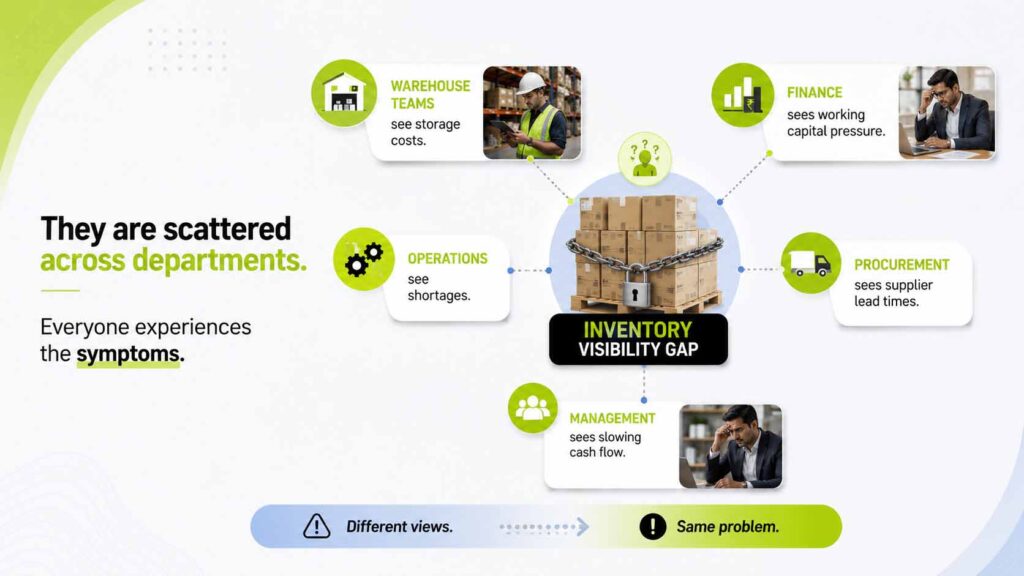
Few see the complete picture.
Four conversations happening inside growing businesses every day
If you spend time speaking with operations leaders, procurement teams, finance managers and warehouse supervisors, the same conversations appear repeatedly.
Conversation #1 : Procurement

This decision is usually made with good intentions.
🚩Production delays are expensive.
🚩Customer delays are worse.
🚩So buyers add buffer stock.
🚩Then additional buffer stock.
🚩Then more safety stock.
Over time, inventory levels quietly expand.
Conversation #2 : Warehouse

A purchase order gets approved.
Goods arrive.
Only then does someone discover similar inventory already exists elsewhere in the warehouse.
Or perhaps in another warehouse altogether.
The problem wasn’t purchasing.
🚩The problem was visibility.
Conversation #3 : Finance

Revenue may have increased by 15%.
🚩Inventory investment may have increased by 40%.
Working capital becomes strained.
Management begins questioning liquidity.
Conversation #4 : Management
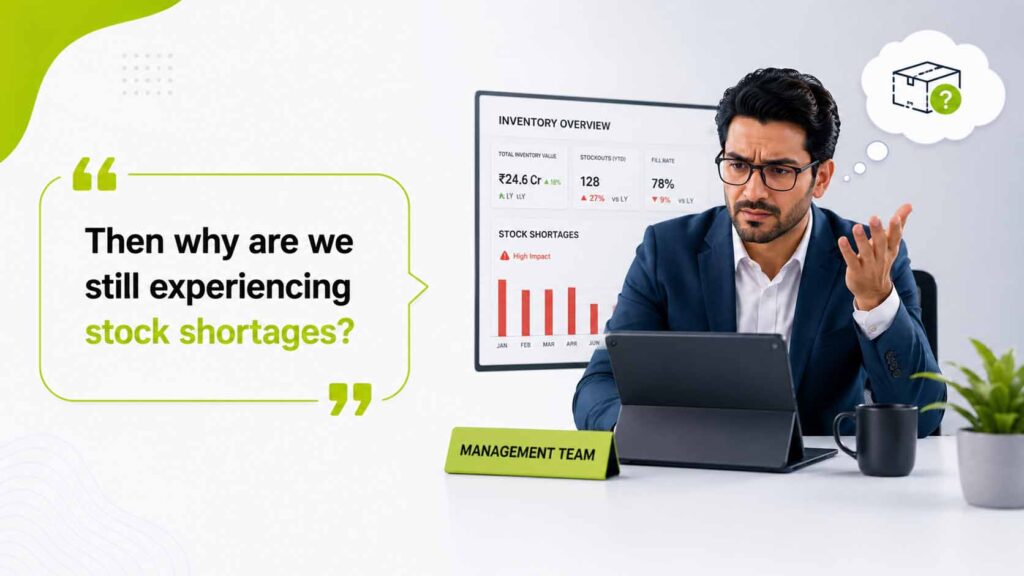
This is perhaps the most frustrating situation.
Inventory levels are high.
🚩Yet production still faces shortages.
🚩Sales still experience delays.
🚩Customers still encounter stockouts.
At this point the issue is no longer inventory quantity.
It is inventory accuracy.
Why inventory problems become more dangerous as businesses grow
Inventory complexity rarely grows in a straight line.
Revenue may double.
Inventory complexity may increase fivefold.
This happens because growth introduces :
- More SKUs
- More suppliers
- More customers
- More warehouses
- More transactions
- More product variants
- More departments

Many organizations continue relying on spreadsheets long after the business has outgrown them.
At first, spreadsheets seem manageable.
Then teams begin maintaining separate files.
Departments create their own versions of reports.
Manual updates increase.
Data inconsistencies emerge.
Soon management discovers that different departments are operating with different versions of reality.
This is where operational inefficiency begins.
The hidden costs most companies never calculate
Most businesses know the value of their inventory.
Few know the cost of carrying it.
Let’s examine the hidden expenses.
- Storage Costs
Larger inventory requires larger facilities.
- Additional warehouse space
- Additional racks
- Additional equipment
- Additional labor
These costs accumulate continuously.
- Capital Costs
Every rupee tied up in inventory has an alternative use.
That capital could be generating returns elsewhere.
This opportunity cost is rarely measured.
- Obsolescence
Markets change. Products evolve. Packaging changes.
Specifications become outdated.
Inventory that seemed valuable twelve months ago may now require discounting or write-offs.
- Damage and Shrinkage
The longer products remain in storage, the higher the risk of :
- Physical damage
- Theft
- Misplacement
- Quality deterioration
This is particularly significant in food processing, pharmaceuticals, chemicals, and FMCG industries.
- Administrative costs
Manual stock verification
Inventory reconciliation
Spreadsheet management
Data correction
Audit preparation
All consume time and resources.
Often more than management realizes.
How inventory quietly eats working capital
- Manufacturing
Production teams often request larger safety stock levels to avoid downtime.
The intention is understandable.
However, when safety stock decisions are not based on real demand patterns, inventory grows faster than necessary.
The result is blocked capital.
- Food Processing
Food businesses face an additional challenge.
Inventory has a shelf life.
Excess stock may not simply sit idle.
It may expire.
One forecasting mistake can create significant losses.
Batch tracking and expiry visibility become critical.
- Distribution businesses
Distributors often manage thousands of SKUs.
Without visibility into movement patterns, inventory accumulates in slow-moving categories while high-demand products remain unavailable.
This creates a paradox :
- Too much inventory
- Not enough availability
At the same time.
- Engineering and Industrial components
Long procurement cycles frequently encourage businesses to overbuy.
Management prefers excess stock over supply disruptions.
Yet over time, inventory becomes heavily concentrated in materials that may not be required for months.
Warning signs your inventory is hurting cash flow
Many businesses don’t recognize inventory issues until financial pressure appears.
Watch for these warning signs :
- Increasing inventory values every quarter
- Rising warehouse costs
- Frequent stock adjustments
- Duplicate purchases
- Supplier payment delays
- Excessive manual stock verification
- Slow-moving inventory accumulation
- Growing working capital requirements
- Regular emergency purchases
- Departments disputing inventory figures
If several of these symptoms exist simultaneously, inventory may already be affecting cash flow.
How Odoo helps businesses turn inventory into a strategic asset
The purpose of an ERP is not simply recording transactions.
Its purpose is creating visibility.
Modern versions of Odoo help businesses connect inventory, procurement, manufacturing, sales, warehousing and finance into a single operational framework.
Instead of departments operating independently, information flows across the business in real time.
For example :
👉When sales confirms an order, inventory availability updates immediately.
👉When production consumes materials, stock levels adjust automatically.
👉When procurement receives goods, availability becomes visible instantly.
👉When inventory moves between warehouses, every department sees the same information.
This creates something many businesses struggle to achieve :
✅A single source of truth.
Odoo also provides capabilities such as:
- Inventory Forecasting
Businesses can view future inventory positions based on confirmed sales, purchases and manufacturing activity.
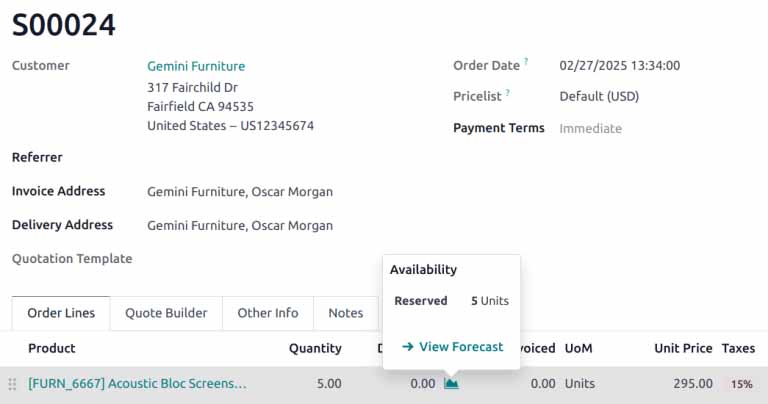
- Replenishment Rules
Automated replenishment helps maintain optimal inventory levels.
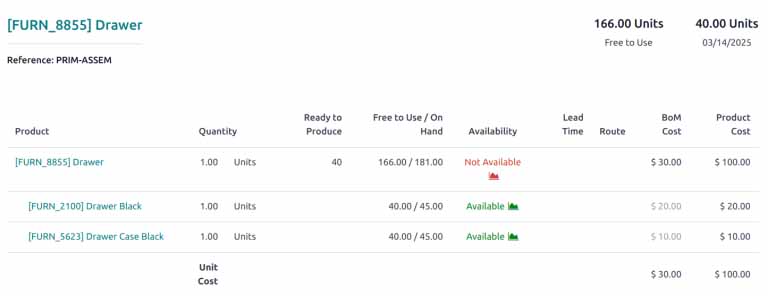
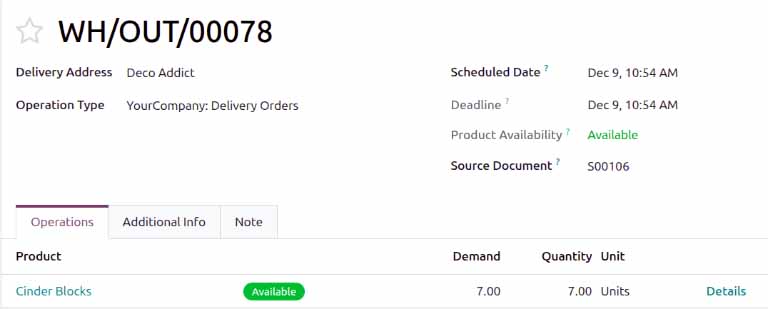
- Inventory Aging Analysis
Management can identify slow-moving and obsolete inventory before it becomes a financial burden.
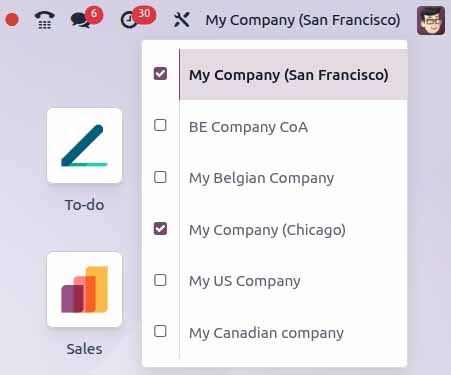
- Multi-Warehouse Visibility
Organizations gain centralized visibility across locations.
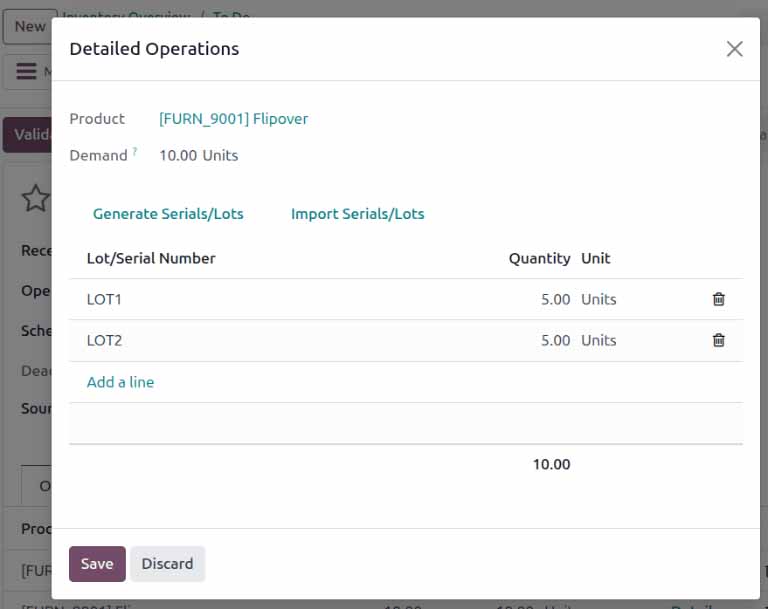
- Batch and Expiry Tracking
Critical for food processing, pharmaceuticals, chemicals and regulated industries.
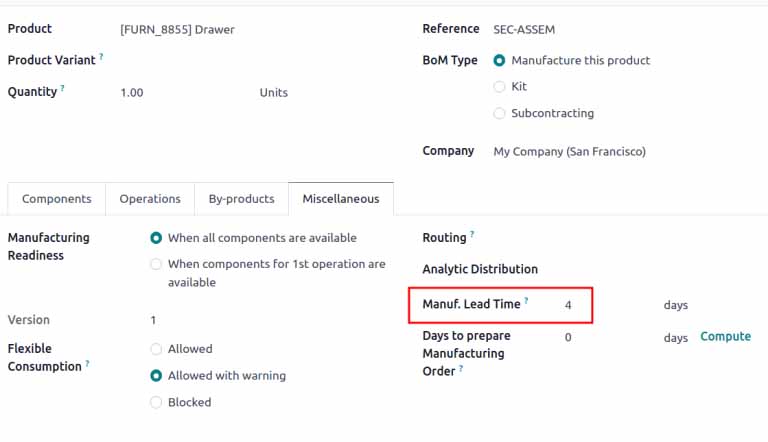
- Manufacturing integration
Inventory movements automatically synchronize with production activity.
The outcome is not simply better stock management.
The outcome is better business decisions.
Building a smarter inventory strategy
Technology alone will not solve inventory challenges.
Successful businesses combine systems with operational discipline.
The most effective organizations consistently :
- Measure inventory turnover
- Monitor inventory aging
- Align purchasing with actual demand
- Review slow-moving inventory regularly
- Improve forecasting accuracy
- Reduce manual intervention
- Standardize inventory processes
- Create visibility across departments
Inventory should support growth.
Not consume it.
Conclusion
Many companies assume cash flow problems originate from insufficient sales.
In reality, some of the most profitable businesses struggle with liquidity because too much capital becomes trapped inside inventory.
As organizations grow, inventory complexity grows with them.
More products.
More suppliers.
More warehouses.
More transactions.
More opportunities for inefficiency.
Without visibility, inventory slowly becomes one of the largest consumers of working capital.
With visibility, inventory becomes a strategic advantage.
This is why growing businesses increasingly invest in connected ERP systems rather than disconnected spreadsheets and departmental tools.
At Pragmatic Techsoft, we have spent more than 17 years helping manufacturers, distributors, food processors, retailers, and service organizations streamline operations using Odoo.
Across hundreds of projects, one observation remains consistent :
The businesses that achieve sustainable growth are rarely the ones carrying the most inventory.
They are the ones that understand it best.
By connecting inventory, procurement, manufacturing, sales, warehousing, and finance into a unified system, organizations gain the visibility required to improve cash flow, reduce waste, strengthen operational control and make better business decisions.
And in today’s competitive environment, that visibility often becomes a competitive advantage in itself.
If you’re evaluating how to improve inventory control, working capital visibility and operational efficiency, we’d be happy to share what we’ve seen work across similar businesses.
📅 Book a slot as per your convenience and schedule a discussion with our experts.
FAQs
1) How often should inventory policies be reviewed?
Most growing businesses should review inventory policies quarterly. Companies experiencing rapid growth, seasonal demand fluctuations, or supply chain volatility may benefit from monthly reviews.
2) Can inventory optimization improve customer satisfaction?
Yes. Better inventory planning often reduces stockouts, improves fulfillment accuracy, and shortens delivery timelines, leading to a better customer experience.
3) What inventory metrics should management review regularly?
Inventory turnover, aging analysis, stock accuracy, carrying cost percentage, service levels, and forecast accuracy are among the most useful indicators.
4) Is inventory reduction always a good strategy?
No. The goal is not the lowest inventory possible. The goal is maintaining the right inventory at the right location and at the right time.
5) What role does forecasting play in inventory management?
Forecasting helps businesses align purchasing and production decisions with expected demand, reducing both excess inventory and stock shortages.
6) When should a company move from spreadsheets to ERP?
A good indicator is when inventory decisions require significant manual reconciliation, departments maintain separate records, or management no longer fully trusts inventory reports.
7) Can Odoo support multi-location inventory management?
Yes. Odoo supports multiple warehouses, inventory transfers, replenishment strategies, lot tracking, serial tracking, and centralized visibility across locations.
8) What is the biggest inventory mistake growing businesses make?
Treating inventory as a warehouse problem rather than a company-wide business process. Inventory decisions affect sales, procurement, production, finance, and customer experience simultaneously.