
“Can Odoo handle manufacturing?” is the wrong first question
The CEO of the manufacturing unit along with his operations head asks for a demonstration.
The consultant creates a manufacturing order, consumes a few components and produces a finished product. Everything works.
The operations head is impressed but asks one more question –
That is when the real evaluation begins.
Most manufacturing systems can demonstrate a straightforward production scenario. The more important question is whether the system can represent your production model, controls and exceptions without creating a fragile web of custom code.
Odoo 19 provides a broad manufacturing foundation. It supports bills of materials, manufacturing orders, operations, work centres, work-order dependencies, Shop Floor execution, quality checks, maintenance links, PLM, lot and serial traceability, subcontracting, by-products, replenishment and manufacturing cost analysis.
However, capability does not automatically mean fit.
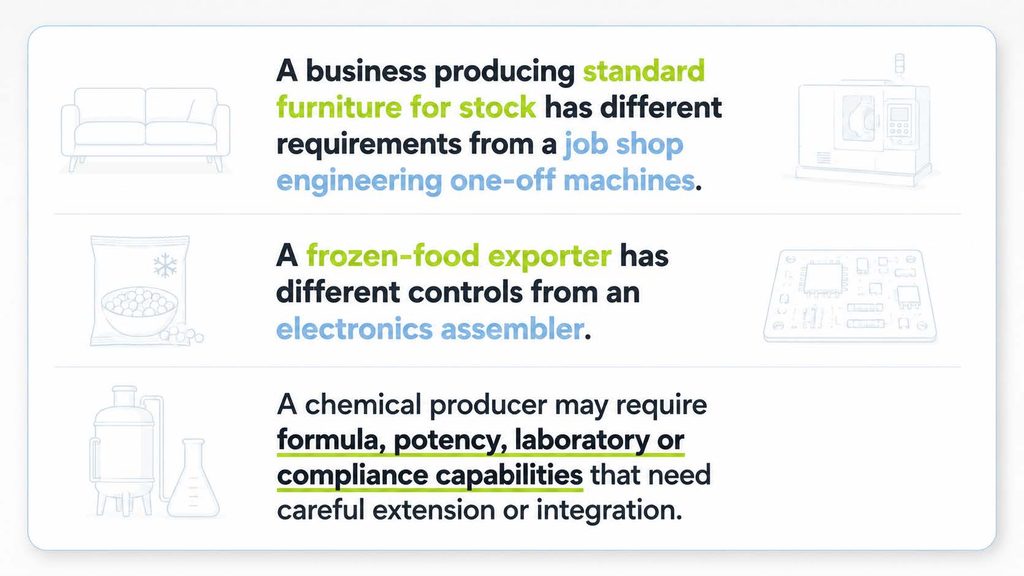
The right answer is not simply “yes” or “no”.
The right answer is a fit-gap assessment.
What Odoo 19 provides
Odoo Manufacturing connects production with sales, inventory, procurement, quality, maintenance, product lifecycle management and accounting.
Depending on the configured applications, routes and edition, Odoo 19 can support the following manufacturing activities :
- Manufacturing orders for planned and customer-driven production
- Single-level and multi-level bills of materials using subassemblies
- Operations and work orders
- Work centres, working hours and capacity information
- Operation sequencing and work-order dependencies
- Shop Floor execution through browser-based workstation or tablet interfaces
- Component consumption with configurable deviation controls
- Scrap and by-product processing
- Lot and serial number traceability
- Quality control points and quality checks
- Maintenance activities linked to work centres and equipment
- Product lifecycle management and engineering change orders
- BoM revisions, approvals and effective dates
- Subcontracting and component resupply flows
- Make-to-order and other replenishment routes
- Master Production Schedule planning
- Expected-versus-real manufacturing cost analysis
- Work-centre operating costs and employee hourly costs
- Work-in-progress accounting entries, subject to accounting configuration
- Production, work-centre and OEE-related reporting
A bill of materials defines the components and quantities required to produce or repair a product. It can also include operations, work centres and operation-specific instructions.
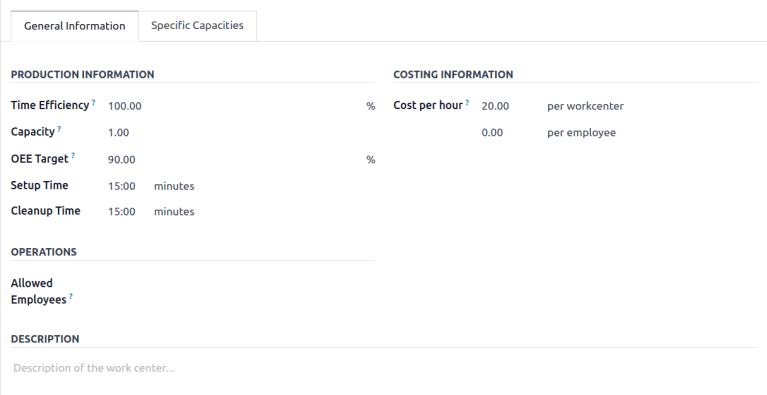
Work centres can be used to organize equipment, plan capacity, track operating costs and measure efficiency. Odoo allows operating costs to be configured per work centre and hourly employee costs to be included in the calculation. The Maintenance application can also connect equipment and maintenance activities to work centres.
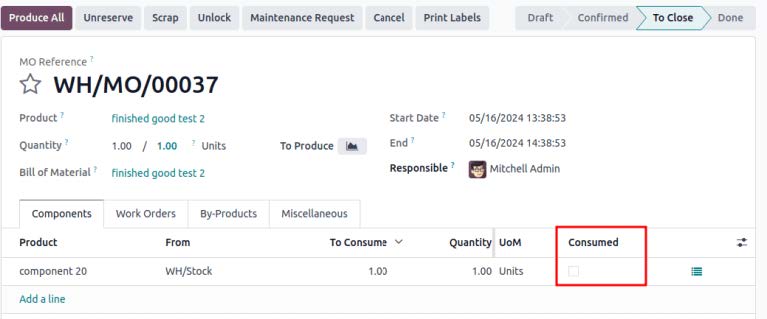
Odoo also supports configurable component consumption. Depending on the BoM setup, consumption can be blocked, permitted or permitted with a warning when actual usage differs from the planned quantity.
The implementation question is therefore not only –
“Does Odoo have this feature?”
It is also –
👉How should the feature be configured?
👉Which team owns the data?
👉What controls must be enforced?
👉What happens when the process deviates from the standard flow?
👉Does the requirement belong in Odoo, an integrated system or a specialized production application?
Fit-gap by manufacturing model
1. Make-to-stock manufacturing
Make-to-stock businesses manufacture against a forecast, replenishment rule or planned inventory requirement.
Odoo’s Master Production Schedule can help users plan longer-term replenishment based on a manually adjustable demand forecast. It calculates suggested quantities for manufacturing or purchasing, while the user decides how to create or approve the replenishment orders. Odoo 19 also provides configurable replenishment triggers, including automatic behavior depending on the setup.
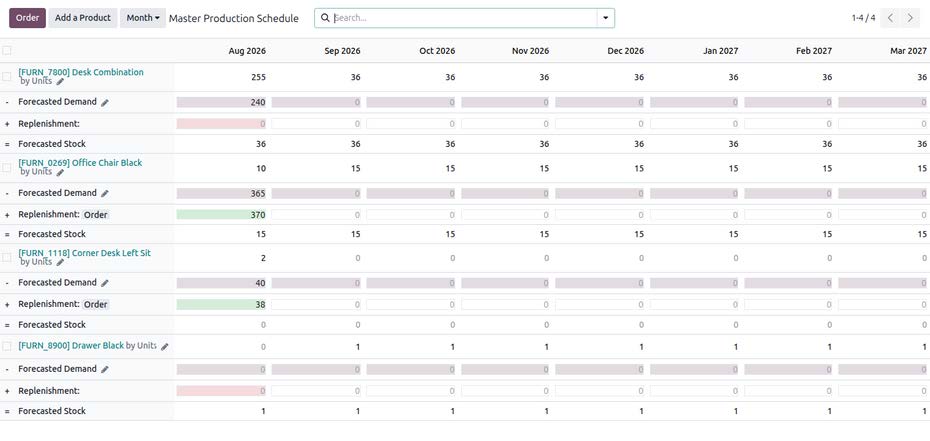
Standard Odoo can therefore support
- Forecast-based production planning
- Manufacturing against minimum and maximum stock levels
- Multi-level component replenishment
- Work-centre and work-order planning
- Inventory forecasting
- Production orders linked to planned demand
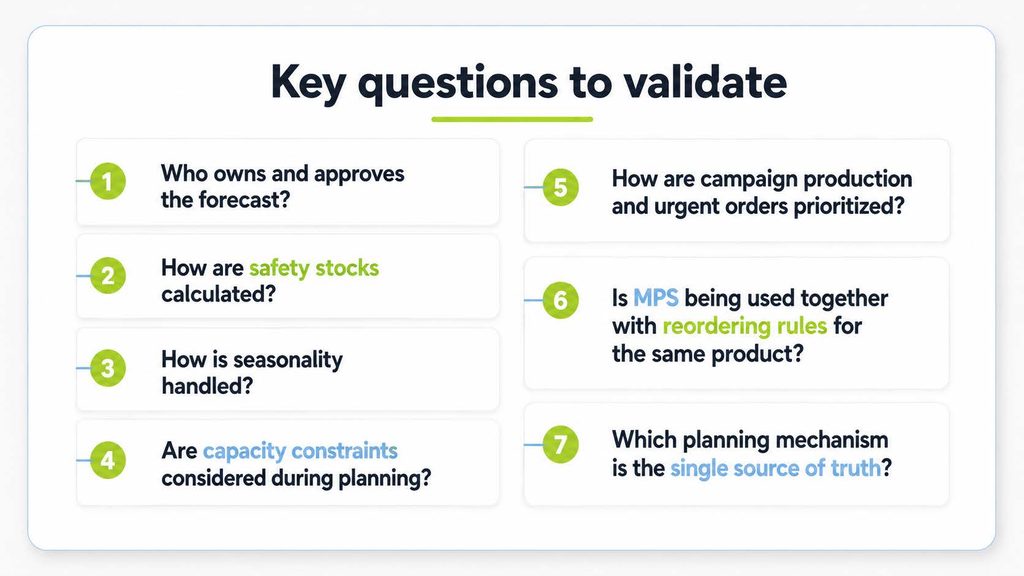
MPS and reordering rules should not be configured independently for the same planning purpose without clear governance. Otherwise, the system may generate overlapping or unnecessary replenishment suggestions.
Standard fit – Good for many make-to-stock operations with manageable planning complexity.
Potential gap – Advanced demand planning, automatic optimization across many constraints or complex sequence-dependent scheduling may require an APS solution or custom planning design.
2. Make-to-order manufacturing
Make-to-order production begins when a customer order creates a requirement for a product.
Odoo’s Replenish on Order route, commonly known as MTO, can create a draft purchase order or manufacturing order when a product is needed for a sales order or another demand source. The replenishment remains linked to the originating requirement.
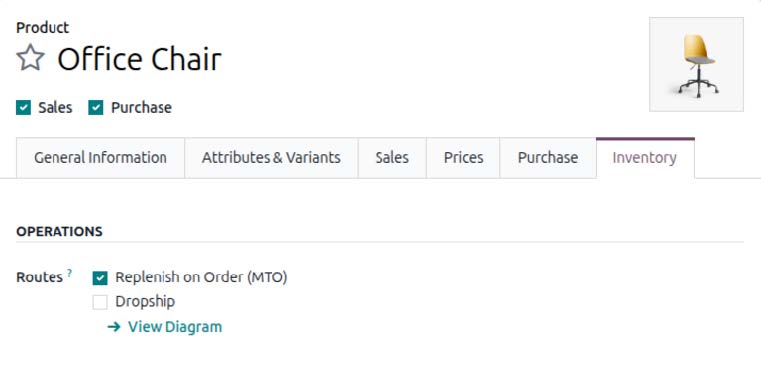
Standard Odoo can support
👉Sales-driven manufacturing
👉Linked sales orders and manufacturing orders
👉Product-specific BoMs
👉Customer-demand traceability
👉Manufacturing lead-time calculation
👉Partial production and delivery flows
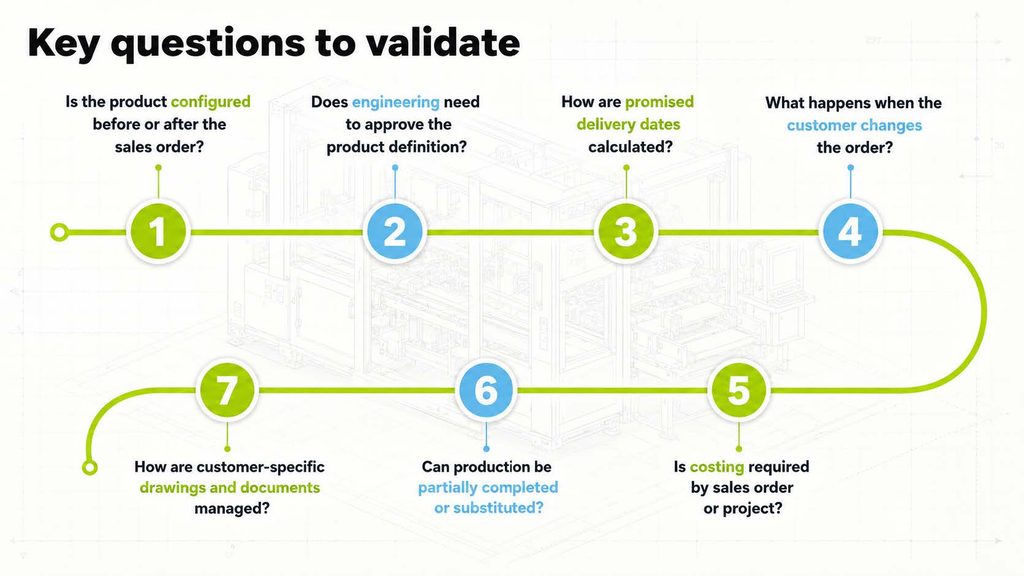
Standard fit : Strong for structured MTO products.
Potential gap : Dynamic product configuration, quote-stage engineering, customer-specific routing and highly variable costing may require extensions or integrations.
3. Assemble-to-order manufacturing
In assemble-to-order operations, common components or subassemblies are kept available and final assembly begins after the customer order is confirmed.
Odoo can support this model through –
👉Product variants
👉Multi-level BoMs
👉Routes and replenishment rules
👉Subassemblies
👉Final assembly manufacturing orders
👉MTO flows for the final product
Multi-level BoMs can be configured so that subassemblies are produced in advance, manufactured on demand or replenished through selected routes.
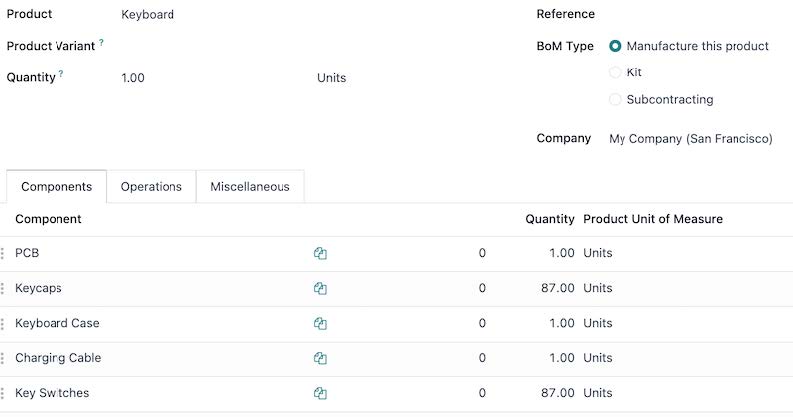
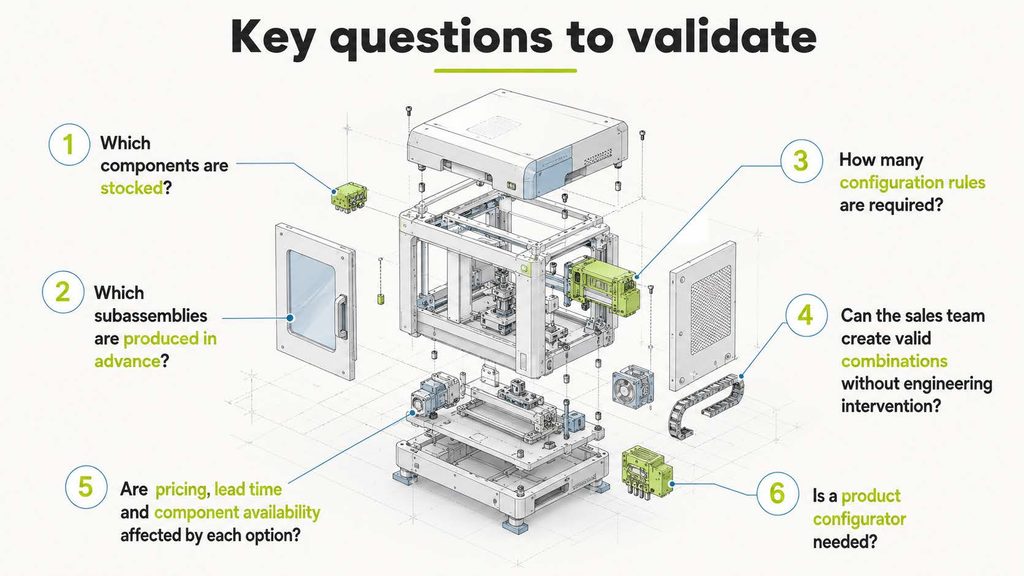
Standard fit : Good when variants and BoM structures are relatively controlled.
Potential gap : Complex rule-based configuration, compatibility logic, constraint checking or automatic engineering logic may require a configurator or custom development.
4. Job-shop manufacturing
A job shop may produce different products for different customers, with varying materials, operations, routings and subcontracting requirements.
Odoo can provide a foundation through –
👉MTO routes
👉Flexible BoMs
👉Work orders
👉Work centres
👉Subcontracting
👉Analytic accounting or analytic distributions
👉Actual component and labour cost tracking
👉Project and sales-order links where appropriately configured
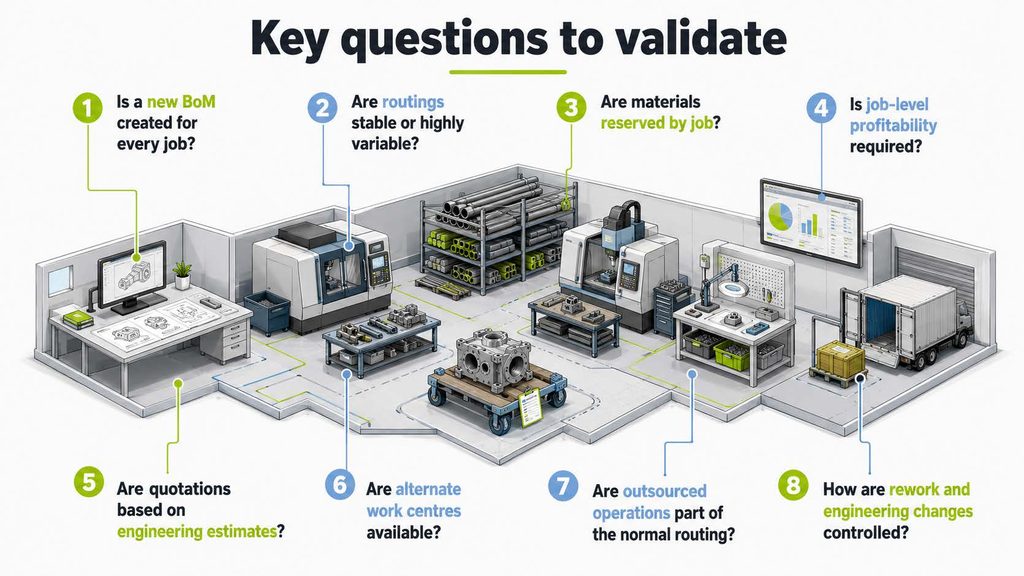
Standard fit : Suitable for many structured job-shop environments.
Potential gap : Highly dynamic routings, quotation engineering, automatic finite-capacity scheduling and detailed job-level profitability may require additional design.
5. Engineer-to-order manufacturing
Engineer-to-order businesses define or modify the product after receiving a customer order.
Odoo PLM supports engineering change orders, BoM revisions, approvals and controlled application of product changes.
Odoo can support –
👉Product and BoM revisions
👉Engineering change orders
👉Approval workflows
👉Revision effective dates
👉Document attachments
👉Controlled application of engineering changes
👉Manufacturing linked to customer demand
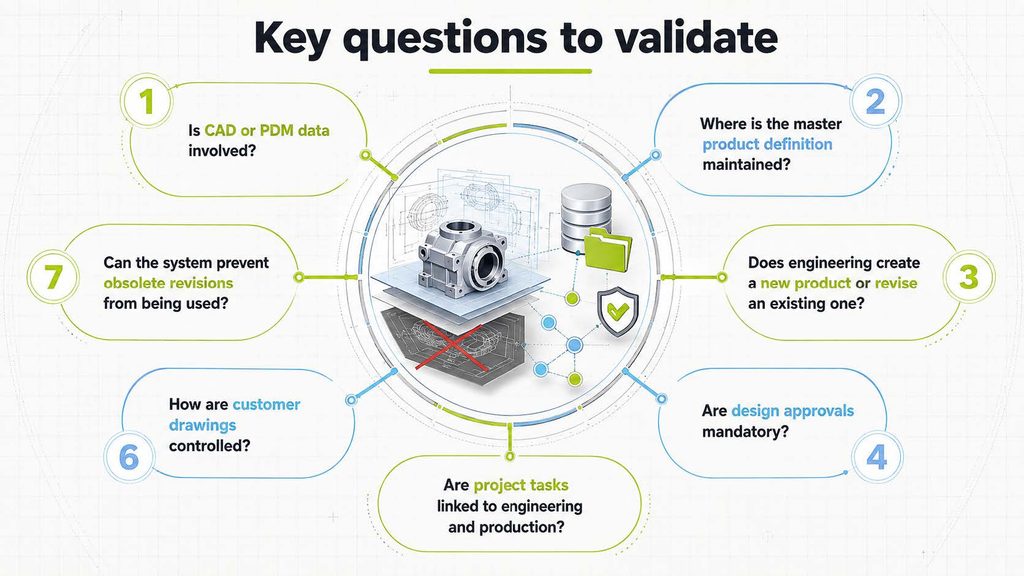
Standard fit : Good for basic to moderately structured engineering change control.
Potential gap : CAD/PDM integration, complex product configuration, engineering resource planning and project-manufacturing coordination may require integrations or extensions.
6. Process manufacturing
Process manufacturers often work with recipes, batches, yields, by-products, quality characteristics and variable input quantities.
Odoo can potentially support simpler process-manufacturing scenarios using –
👉BoMs configured as recipes
👉Batch manufacturing
👉Lot tracking
👉By-products
👉Quality control points
👉Flexible component consumption
👉Expiration dates
👉FEFO inventory removal
👉Scrap and rework flows
Odoo quality control points can generate checks at predetermined intervals and for specific operations. Quality checks can be processed from manufacturing orders, inventory operations or Shop Floor, depending on how they are configured.
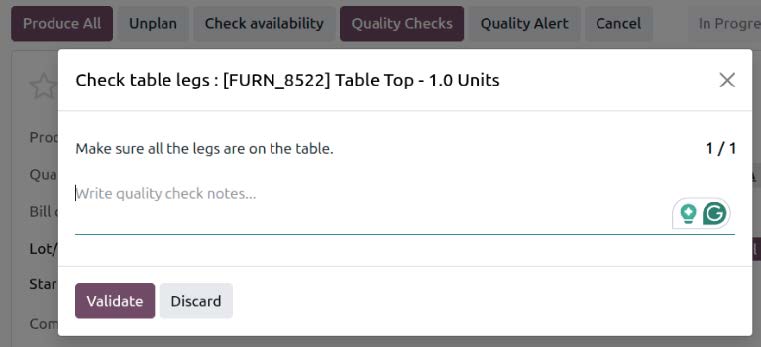
For perishable products, Odoo can track expiration, best-before, removal and alert dates. FEFO selects products for removal based on their assigned removal dates.
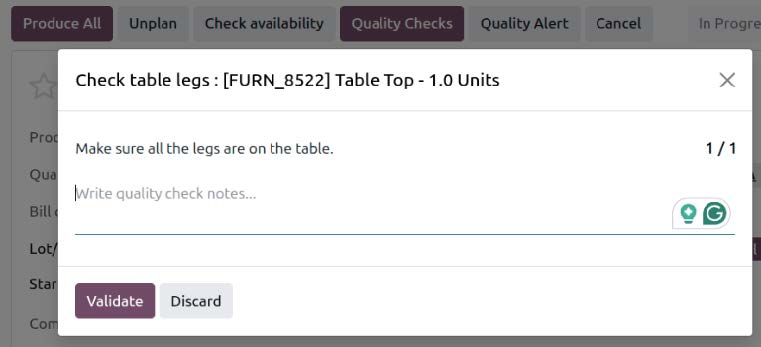
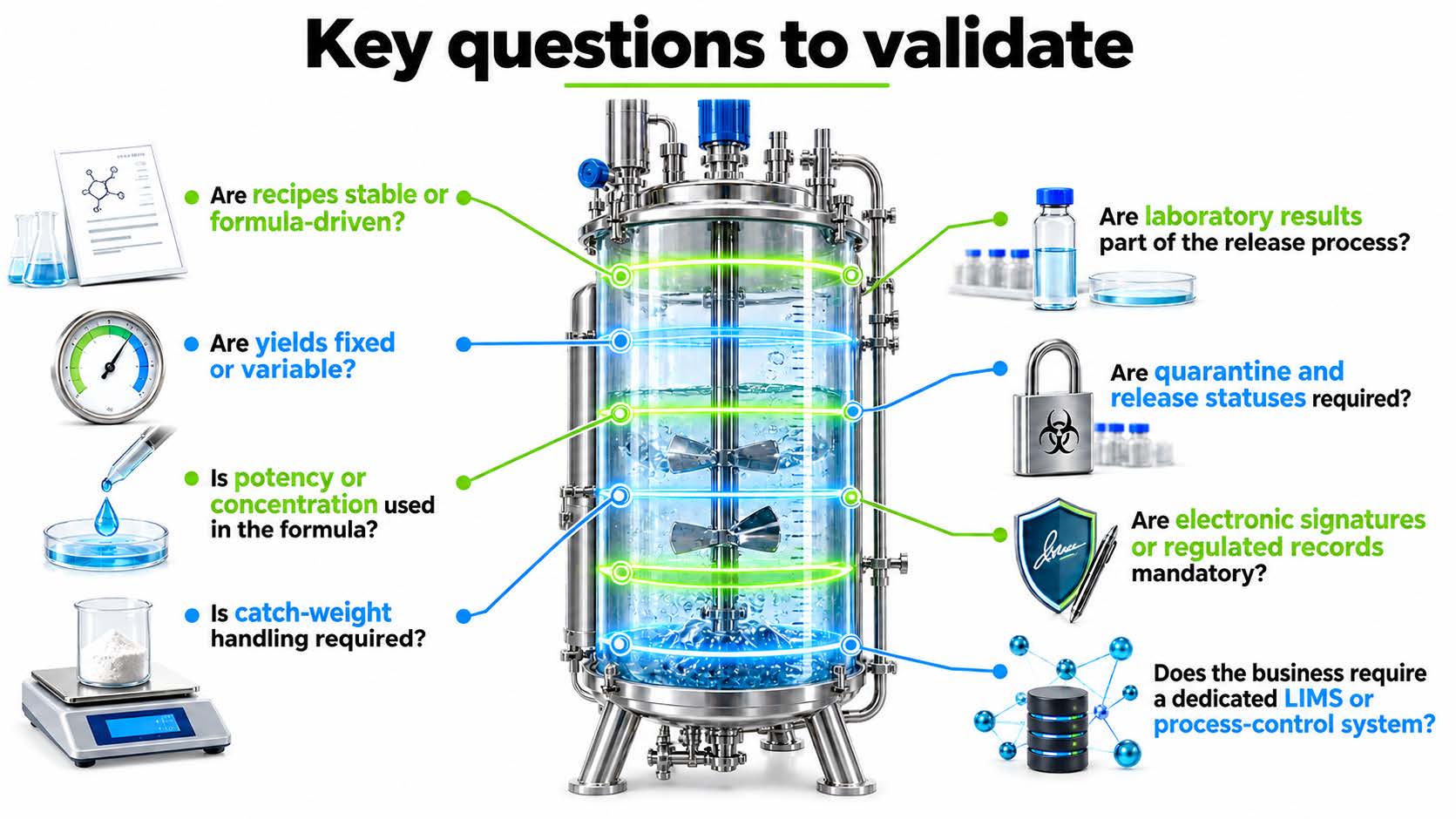
Potential standard fit : Batch production with predictable recipes, traceability and quality checks.
Potential gap : Potency-based formulation, variable-yield automation, catch-weight transactions, laboratory information systems, regulated electronic records and real-time process control may require specialized applications or integrations.
Fit-gap by operational requirement
1) Bills of materials and recipes
Odoo BoMs define the components and quantities required to produce a product. They can include operations and work-centre assignments. Multi-level structures can be created using subassemblies and replenishment routes.
Flexible consumption can be configured to control deviations between planned and actual component usage. The available settings should be tested in the target Odoo 19 environment, especially where material variance has financial or regulatory consequences.
Ask
👉Are BoMs stable and repeatable?
👉Are alternatives allowed?
👉Are quantities fixed, proportional or variable?
👉Are substitutes permitted?
👉Are process losses included?
👉Are by-products generated?
👉Is a unique BoM required for every customer order?
2) Work centres and capacity
Work centres represent the locations or resources where operations are performed. They can be used for –
👉Operation assignment
👉Capacity planning
👉Working hours
👉Operating costs
👉Employee costs
👉Equipment tracking
👉Maintenance activities
👉Efficiency and OEE-related reporting
Odoo allows work-centre operating costs and employee hourly costs to be configured. Maintenance can be linked to work-centre equipment and productivity.
Ask
How many machines and labour resources are involved?
Are resources interchangeable?
Are alternate work centres available?
Does the business have sequence-dependent changeovers?
Are setup, cleanup and waiting times recorded?
Are machine calendars accurate?
Does the plant require finite-capacity scheduling?
Are maintenance shutdowns included in planning?
A work centre that stores capacity and operating cost is not automatically a complete APS engine. Manufacturers requiring automatic optimization across material, labour, tooling, maintenance, priority, setup and delivery constraints should validate the requirement separately.
3) Operation sequence and dependencies
Odoo supports operation dependencies. A work order can be configured as blocked by another operation that must be completed first. The dependent work order is then scheduled in relation to the preceding operation.
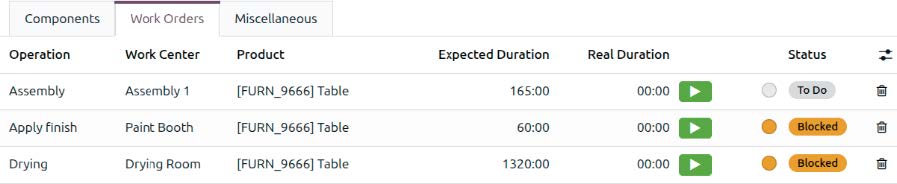
This can support sequential production flows such as –
Cutting | Machining | Surface treatment | Assembly | Inspection
Ask
Are operations primarily sequential?
Can operations overlap?
Are alternate paths required?
Are routing decisions conditional?
Can an operation be outsourced?
Are approvals required between operations?
Should users be prevented from bypassing an operation?
Are rework loops part of the standard process?
The key distinction is between representing dependencies and enforcing every operational control. If the business must prevent users from starting, completing or closing operations out of sequence, test the exact behavior and identify whether configuration is sufficient.
4) Shop Floor execution
Odoo Shop Floor provides a visual interface for processing work orders and recording production activity. It is designed for real-time execution using work-centre control panels and browser-based shop-floor devices.

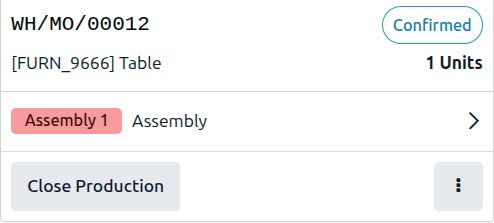
It can support –
👉Work-order instructions
👉Operator time tracking
👉 Production progress
👉Quality checks
👉Maintenance requests or actions
👉Feedback from the production floor
👉Tablet or workstation-based execution
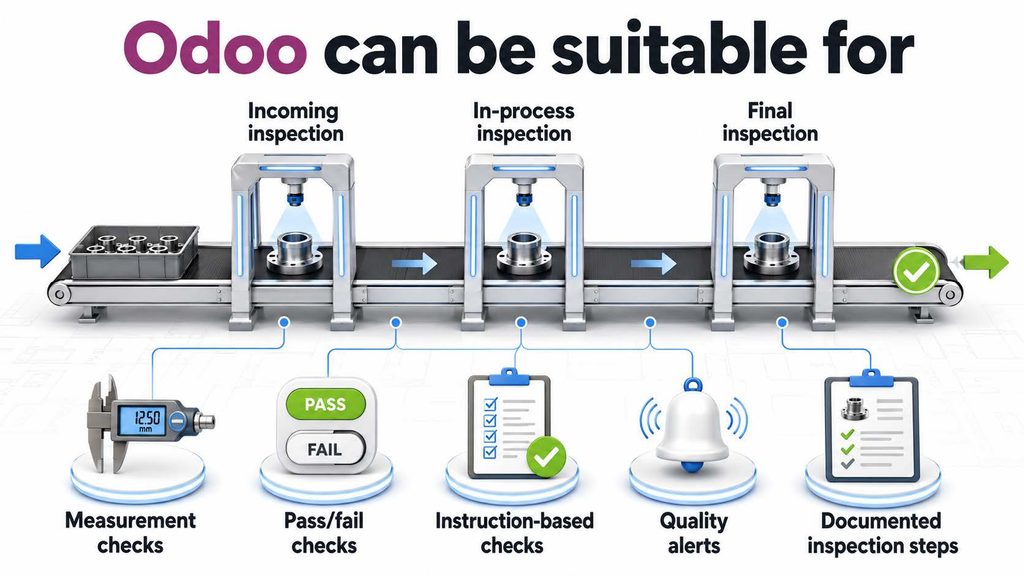
Quality checks configured for work orders can be completed through Shop Floor, including pass/fail, measurement and instruction checks.
Ask
Will operators use tablets or workstations reliably?
Is the plant network stable?
Are barcode scanners or RFID devices required?
Does the business need offline execution?
Is machine data captured automatically?
Are operator screens simple enough for the production environment?
Does every operation require an electronic confirmation?
Are photos, measurements or signatures required?
Offline capability, machine integration, specialized operator screens and automatic data capture should be treated as requirements to validate – not as assumptions about standard Shop Floor.
5) Quality management
Odoo Quality can create quality checks through quality control points for manufacturing and inventory operations. Checks may include pass/fail decisions, measurements, instructions and material-consumption confirmations.
Ask
Are simple checks sufficient?
Are measurement tolerances required?
Can a failed check trigger a quality alert?
Is quarantine stock required?
Are certificates of analysis needed?
Are laboratory results part of the process?
Are electronic records regulated?
Are customer-specific quality documents required?
A quality module is not automatically a laboratory information system or a complete regulated compliance platform.
6) Traceability
Odoo supports lot and serial number tracking for products used in manufacturing and inventory operations. This can provide backward and forward traceability across receipts, production and deliveries.
For perishable goods, expiration dates and related dates can be configured, while FEFO can help select products based on their removal dates.
Ask
Is lot or serial tracking required?
Is raw-material genealogy needed?
Must every component be linked to a finished product?
Is supplier-batch tracking required?
How quickly must a recall report be produced?
Are expiration and removal dates mandatory?
Are split and merge operations common?
Are rework and returns included in the traceability model?
The fit depends not only on whether tracking exists, but also on the level of genealogy, reporting speed and audit detail required.
7) Subcontracting
Odoo can support subcontracting scenarios in which –
✔️The subcontractor provides the components
✔️The manufacturer sends components to the subcontractor
✔️Components are delivered directly to the subcontractor through a configured resupply or dropship flow
The exact behavior depends on the selected route, locations, ownership rules and inventory configuration.
Ask
Who owns the components while they are at the subcontractor?
Which location represents subcontractor stock?
How are components resupplied?
How are losses and excess consumption handled?
Does the subcontractor report production quantities?
Are subcontracted operations part of a larger routing?
How are subcontracting costs captured?
Are certificates or inspection documents required?
This area should always be validated using a complete end-to-end scenario rather than only a product demonstration.
8) Manufacturing cost
Odoo can calculate expected and real manufacturing costs using configured component costs, work-centre operating costs, employee costs, actual component consumption and recorded operation time. Odoo’s manufacturing cost documentation distinguishes the expected cost from the real cost shown for the manufacturing order.
Ask
Are component costs based on standard, average or actual valuation?
Is labour recorded by an employee or work centre?
Are machine costs included?
How are setup and cleanup time treated?
How is overhead allocated?
How are scrap and rework costed?
Are subcontracting costs included?
Is profitability required by product, customer, project or sales order?
Is WIP posted during production or only at period end?
Odoo 19 supports WIP accounting entries, but the accounting treatment must be configured according to the company’s valuation method, accounting policies and localization requirements.
What usually needs configuration rather than customization
Many requirements sound unique because the business uses local terminology or has never documented its process. They may still be achievable through standard Odoo configuration.
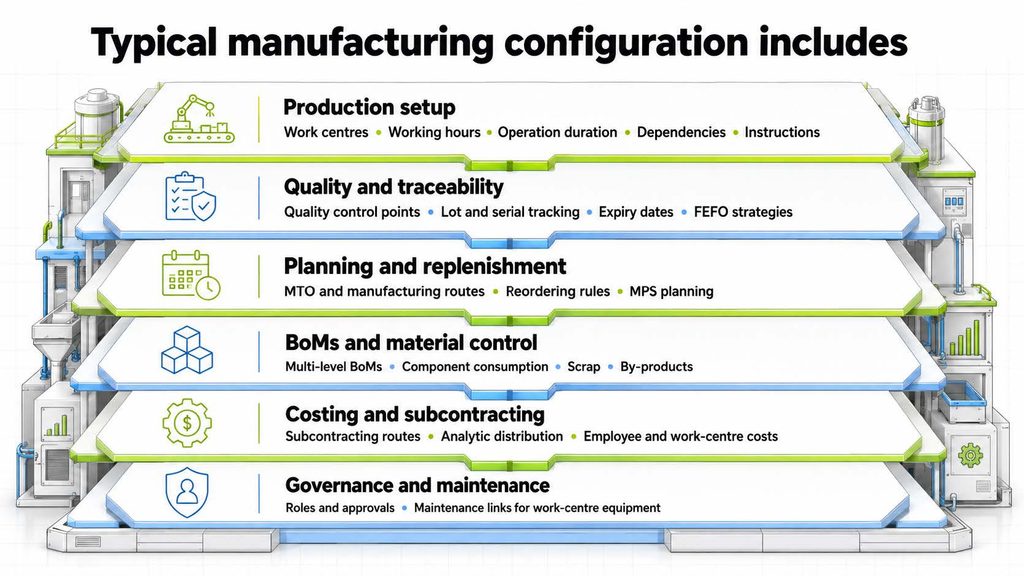
A good implementation partner should demonstrate the standard approach first. The demonstration should use representative data and include the customer’s difficult scenarios – not only a simple manufacturing order.
Where extensions or integrations may be justified
Customization or integration can be appropriate when a requirement –
✔️Creates a genuine competitive advantage
✔️Meets a critical regulatory or customer requirement
✔️Closes a material control gap
✔️Requires data from equipment or another specialized system
✔️Cannot be maintained reliably through standard configuration
Possible examples include –
Dynamic product or BoM configuration
Complex product compatibility rules
Catch-weight transactions
Specialized weight calculations
Variable-yield formulas
Machine, PLC or IoT integration
Laboratory information system integration
Advanced finite-capacity scheduling
Industry-specific compliance documents
Customer production portals
Complex label generation
Automated barcode or RFID capture
Strict operation enforcement
Specialized production planning algorithms
Integration with CAD, PDM or MES platforms
Advanced rework and nonconformance workflows
For example, a manufacturing extension may add stricter validations, dynamic weight handling, streamlined BoM creation or controls around manufacturing-order cancellation. However, an extension should be selected because the operational requirement is clear – not because a longer feature list automatically means a better manufacturing system.
Before approving an extension, confirm
- Standard configuration has been tested first
- It supports the required Odoo version and edition
- It is maintained and properly documented
- Its impact on accounting, valuation and traceability is understood
- Users can operate and support it
- Process improvement cannot deliver the same outcome
- Upgrade dependencies are acceptable
When Odoo may not be the right primary system
Odoo may not be the best primary manufacturing platform when the operation depends on highly specialized, high-frequency process control that belongs inside a dedicated MES, process-control, laboratory or automation environment.
Odoo may still be valuable as the ERP layer around that system, but the architecture must be clearly defined.
Warning signs include –
The plant expects Odoo to replace real-time machine-control systems
Hundreds of complex scheduling constraints require automatic optimization
Regulatory functionality is assumed rather than demonstrated
Critical machine data has no reliable interface
Production depends on offline operation that standard workflows cannot support
Users cannot reliably interact with the proposed shop-floor devices
Almost every standard workflow must be rewritten
Product genealogy must be captured at a level not supported by the proposed data model
Laboratory, potency or formula controls are central to production
The organization cannot maintain custom modules and integrations
The implementation depends on undocumented workarounds
The purpose of a fit assessment is not to force a “yes”. It is to identify where Odoo creates value, where configuration is sufficient, where an extension is justified and where another specialized system should remain in the architecture.
A manufacturing fit-assessment checklist
Before deciding whether Odoo is suitable, document the following for each product family or production site –
1) Production model
- Make-to-stock, make-to-order, assemble-to-order, job shop or engineer-to-order
- Discrete, process, batch or mixed manufacturing
- Production volume and order frequency
- Number of products, variants and active BoMs
2) Product and engineering
- BoM depth and complexity
- Product variants
- Substitute components
- Engineering changes
- Approval requirements
- CAD, PDM or document-management integrations
- Effective dates and revision control
3) Planning and capacity
- Forecasting method
- Reordering rules
- MPS usage
- Work-centre capacity
- Alternate resources
- Setup and cleanup times
- Changeover rules
- Maintenance downtime
- Finite-capacity scheduling requirements
- Rescheduling and priority rules
4) Materials and inventory
- Component reservation
- Lot and serial tracking
- Expiration dates
- FEFO
- Scrap and rework
- By-products
- Quarantine locations
- Subcontractor inventory
- Catch-weight requirements
- Supplier-batch traceability
5) Shop Floor
- Tablets, terminals or industrial devices
- Barcode, RFID or scanner requirements
- Network reliability
- Offline requirements
- Operator instructions
- Labour-time capture
- Machine or IoT data
- Electronic approvals or signatures
6) Quality and compliance
- Incoming, in-process and final inspections
- Pass/fail checks
- Measurements and tolerances
- Quality alerts
- Certificates
- Laboratory integration
- Regulated records
- Customer-specific compliance documents
7) Costing and accounting
- Expected versus actual cost
- Labour cost
- Machine cost
- Overhead
- Scrap and rework cost
- Subcontracting cost
- WIP accounting
- Inventory valuation method
- Product, project or order-level profitability
8) Integrations
- Sales and CRM
- Inventory and procurement
- Accounting
- Maintenance
- Quality
- CAD or PDM
- MES
- Machinery and IoT
- Laboratory systems
- Shipping and label systems
- Customer or supplier portals
9) Governance
- Non-negotiable controls
- Data ownership
- User roles and approvals
- Exception-handling procedures
- Reporting requirements
- Upgrade and support responsibilities
- Customization budget and maintenance capability
Ask the implementation partner to demonstrate the three most difficult scenarios using representative master data.
For example –
1. A constrained production order involving multiple work centres and a changeover.
2. A batch product requiring lot traceability, quality checks and expiry handling.
3. A customer-specific order involving engineering changes, subcontracting or rework.
A successful demonstration should cover not only the happy path, but also shortages, rejected quality checks, partial production, excess consumption, machine downtime, order changes and cancellation.
Fit depends on the operating model
Odoo 19 is a capable manufacturing foundation for many small, mid-sized and multi-process businesses, particularly where production must remain closely connected to sales, inventory, procurement, quality, maintenance and accounting.
Its value is not limited to creating a manufacturing order. The platform can connect demand, materials, operations, work centres, quality records, traceability, costing and financial information in one business system. [odoo](https://www.odoo.com/documentation/19.0/applications/inventory_and_mrp/manufacturing.html)
However, software capability should not be evaluated through a generic feature checklist.
The real question is whether Odoo can support your manufacturing model with a maintainable balance of
- Standard functionality
- Configuration
- Process improvement
- Carefully selected extensions
- Reliable integrations
- Specialized systems where necessary
A proper manufacturing fit assessment should map the current production flow, test high-risk scenarios and classify each requirement as –
Standard
Configurable
Extension-dependent
Integration-dependent
Better handled by a specialized system
That approach creates a more realistic implementation scope and reduces the risk of discovering critical gaps after go-live.
For manufacturers considering Odoo, Pragmatic Techsoft’s fit-assessment approach can be positioned around process mapping, risk-based scenario testing and requirement classification.
Any specific application or extension should be presented only with its confirmed Odoo version and supported deployment options.
Book a manufacturing fit assessment with Pragmatic Techsoft.
Frequently asked questions
1. Is Odoo suitable for small and mid-sized manufacturers?
Yes, Odoo can be suitable for many small and mid-sized discrete, process, job-shop and mixed manufacturing operations. Suitability depends more on workflow complexity, compliance requirements, planning constraints, data quality and integration needs than on company size alone.
2. Can Odoo manage multi-level BoMs?
Yes. Odoo supports multi-level BoMs using subassemblies. The replenishment method for each subassembly can be configured according to the required manufacturing or inventory flow.
3. Can Odoo track actual production cost?
Yes. Odoo can calculate real manufacturing cost using actual component consumption, work-centre operating costs, employee costs and recorded operation time. The accuracy of the result depends on costing, valuation, time-tracking and overhead configuration.
4. Can Odoo handle batch manufacturing and expiry dates?
Yes, for many batch-manufacturing scenarios. Odoo can use lots, expiration dates, removal dates, alert dates and FEFO inventory removal. These features require correct product tracking, inventory and location configuration.
5. Does Odoo provide finite-capacity scheduling?
Odoo provides work-centre capacity information, working hours and work-order planning. However, manufacturers requiring advanced automatic optimization across many constraints – such as materials, labour, tooling, changeovers, maintenance and delivery priorities – should validate whether an additional APS solution is required.
6. Can Odoo enforce operation dependencies?
Odoo supports work-order dependencies through the BoM configuration. A dependent operation can be configured as blocked by a preceding operation. The exact level of enforcement should be tested if the business must prevent users from bypassing, completing or closing operations out of sequence.
7. Can Odoo integrate with machines or MES platforms?
Odoo can be integrated with machinery, IoT systems and MES platforms when suitable interfaces and a clear integration design are available. The design should specify data ownership, synchronization frequency, error handling, downtime procedures and operational fallback.
Standard Odoo should not automatically be treated as a replacement for a dedicated MES or real-time machine-control system.
8. Can Odoo manage quality checks on the shop floor?
Yes. Quality control points can create checks for manufacturing operations and work-order quality checks can be completed from Shop Floor. Odoo supports several check types, including pass/fail, measurement and instruction-based checks.
9. Can Odoo manage subcontract manufacturing?
Odoo can support subcontracting flows in which the subcontractor supplies components, the manufacturer provides components or components are resupplied directly to the subcontractor. The exact inventory and accounting behavior must be validated against the configured routes, locations and ownership model.
10. Is customization always necessary for complex manufacturing?
No. Many requirements can be handled through BoMs, routes, work centres, operation dependencies, quality control points, traceability, approvals and reporting configuration.
Customization is more appropriate when the requirement involves a genuine control gap, competitive advantage, industry-specific compliance, specialized calculation, machine integration or a workflow that cannot be maintained through standard configuration.
11. Can Odoo replace an MES?
Sometimes Odoo can cover basic or moderate shop-floor execution requirements, but it should not automatically be considered a replacement for a specialized MES. If the plant requires high-frequency machine data, real-time process control, advanced dispatching, detailed downtime analytics or offline industrial execution, a hybrid ERP-MES architecture may be more appropriate.
12. What is the best way to evaluate Odoo for manufacturing?
Document the manufacturing models, BoM complexity, routings, capacity constraints, quality requirements, traceability rules, costing method, shop-floor devices and integrations.
Then ask the implementation partner to demonstrate the three highest-risk production scenarios using representative data. The evaluation should classify every requirement as standard, configurable, extension-dependent, integration-dependent or better handled by another system.